Sunday, January 30, 2022

What Comes First – The Fruit or the Plant?


Well, that seems like an easy question, right? Yet when it comes to invasive plant spread, some people continue to be unaware of how invasive plants get around (the classic answer is: “It never spreads in my yard, I don’t think it’s invasive.”). I think a refresher on the birds and the bees seems to be in order.
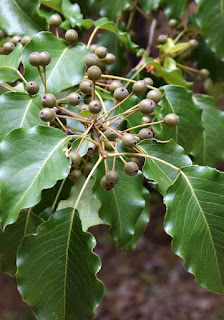
Callery pear fruit

Invasive plants arrive here in different ways originally, but once they’re here they spread thanks to the 3 W’s: wind, water, and wildlife (not including those that spread by runners). Of course, some plants were specifically encouraged to support wildlife; the plants known as thorny and autumn olive (Elaeagnus sp.) are in that group. They’ve since become one of the top invasive plants in Georgia and the southeastern US, and they continue to be sold and planted today.

Fruit-bearing invasive plants are often spread by birds as they eat them, fly some distance away, and deposit the seeds of the fruit in new places. This behavior by birds leads some people to believe that there is a net positive impact on the ecosystem if birds are able to eat the fruits. What is not well understood is that these fruits are often not the food of choice for these birds but rather one of low nutrition or last resort. Poor nutrition can slow migration and make birds vulnerable to other risks. One particular non-native plant, Nandina domestica, actually has fruits that can be toxic to cedar waxwings because they can gorge on fruits.
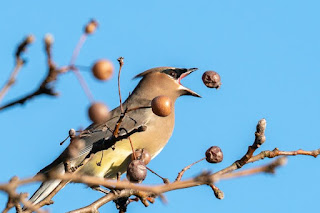
Cedar Waxwing eating Pyrus calleryana in winter.
Photo from Pilot Online Original Source: Carol Annis

Once humans know better, we can help heal the habitats that our native birds share with us. Our landscapes were planted after native plants were removed from the site. It’s not just our yard, it’s a million yards, billions of acres that have been disrupted one acre at a time, but we can begin to stitch some back together and create new habitat. Plants which fed birds then – native plants – can be added back.

Fruit-bearing native plants produce fruit from spring to fall (starting with black cherry), but let’s focus on what migrating birds are eating in the fall and what winter residents are eating in the winter since we’re in the here and now.

Fruits for fall migrating birds include native viburnums, spicebush (Lindera benzoin), beautyberry (Callicarpa americana), shrub dogwoods (e.g., Cornus amomum), most hawthorns (Crataegus) as well as late blueberries (Vaccinium arboreum) and blackberries (Rubus).

In the winter in Georgia, native plants with late or persistent fruits include flowering dogwood (Cornus florida, or now known as Benthamidia florida ), green hawthorn (Crataegus viridis), native shrub and tree form hollies (Ilex), and eastern redcedar (Juniperus virginiana).

These native fruit-bearing plants benefit not just birds that eat fruits but also others. Native plants will also offer beneficial support to insectivores because butterflies and moths can use native plants for caterpillars. Native plants support birds in far more ways that fruit and that is their superpower advantage over non-native plants.

Sunday, January 23, 2022

Is Your Garden Part of the Ecosystem?


"If something is not eating your plants, then your garden is not part of the ecosystem."

I don’t know the source of this quote, but a meme is circulating around the internet with it. It’s a good one and I hope it has inspired new tolerance for insect herbivore nibblings, but the meme itself doesn’t give any context so it might be a smug platitude for those in the know. 

I want people to learn so I decided to create a graphic to help turn the statement into a quick learning opportunity.


If this is your first time hearing this phrase, what does it mean for how we garden?

  •         Insects only eat the plants to which they are adapted.
  •         Insects eat plants for a reason (eating plants is part of their life cycle).
  •         The chain of the ecosystem is that other critters (like birds) eat insects or         eat things that eat insects.

Therefore, supporting insects with plants that they can eat is how your garden can be part of the ecosystem. If you want to have butterflies, bees, birds and more to be part of your garden, you have to support the circle of life. Hopefully this new graphic will help more people understand that. Download the photo and start passing it around.

Thanks to my husband for always helping me to create graphics to support my message.


Sunday, January 16, 2022

January 2022 Moment in Nature

I started this #amomentinnature feature last January, inspired by a friend. I enjoyed doing it, making a special effort to notice and record special moments each month, so I'm going to continue it this year.

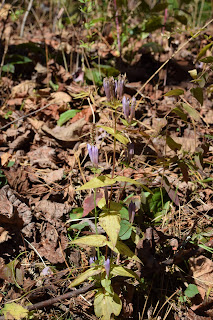
All purple Tipularia discolor

Several days ago I was scouting a property for a plant rescue and we spotted this clump of all purple cranefly orchid (Tipularia discolor). While having the upper leaf surface be purple is unusual, it is a known occurrence. This research paper considered whether the coloration was a sign of stress; the conclusion was it was probably not but rather just a genetic difference. Therefore, we can enjoy it for being a special find!

Sunday, January 9, 2022

Red Winter Berries by Design


Ilex decidua
Ilex decidua

Recently I came across a spectacular group of small trees with red berries in a business park. At first I thought it was a popular cultivar of hawthorn but when I stopped to look, I realized it was deciduous holly (Ilex decidua). I love finding native plants being used in professional landscape design.

Ilex decidua plants with a hedge of Ilex cornuta behind

That brings to four the number of red-berried native plants that I’ve seen used in plant designs. They include both deciduous and evergreen plants. Since this post focuses on designed landscapes, I’m providing links to known cultivars of these hollies, especially so that you can get reliable male and female plants. When it comes to hollies, generally plan for using both male and female plants in a group so that you can get berries on the females (although Ilex x attenuata ‘Fosteri’ is considered self-fertile). There may be newer cultivars not included in these lists.
Probably the most-widely used is the group of evergreen hybrid hollies developed from two native species. The Ilex x attenuata hybrids (Ilex opaca and Ilex cassine parents) generally have good form, fewer spines, and good berry set. A list of cultivars of Ilex x attenuata can be found here.

Ilex x attenuata hybrid

Ilex opaca in Milton

In Milton, GA, I recently found an attractive grouping of American holly (Ilex opaca) in a landscaped arrangement by City Hall. The area also included some Ilex x attenuata hybrids and other native plants like Virginia sweetspire (Itea virginica). 

Normally I find American holly growing in old yards or cemeteries so I’m happy to see it get more use. A list of cultivars of Ilex opaca can be found here (please note that ‘Jersey Princess’ is not the same as ‘Blue Princess’ which is a non-native hybrid).

Deciduous hollies are popular with gardeners where winterberry (Ilex verticillata) has long been the favorite. It may be the most well-known dioecious plant for gardeners to learn that having male and female plants makes a difference in fruit set, perhaps in part to the creative naming like ‘Southern Gentleman’ and ‘Jim Dandy’ for the male cultivars

I have come across the larger possumhaw (Ilex decidua) two times in design. The most recent one was a huge instillation with over 20 plants; most plants were female but you could see a few fruitless males as well. Some of them were also near a huge hedge of Chinese holly (Ilex cornuta) which may help with fruit set if they bloomed at the same time. You can find cultivars of Ilex decidua here. 

Ilex verticillata before leaf drop
Ilex decidua with one leaf left


Another very common evergreen native holly is Yaupon holly (Ilex vomitoria). While most popular in a dwarf cultivar used as a foundation shrub (where I never see fruit), it is also used as a large shrub/tree in upright and weeping forms. There is an outstanding weeping one in my son’s neighborhood. It could be ‘Pendula’ or there might be other cultivars of that form. 

Ilex vomitoria, weeping form

Well, after all those hollies, the final plant is a hawthorn. Crataegus viridis ‘Winter King’ is a very popular cultivar for designed landscapes. Several years ago I stopped to look at a fine group of them gracing the front of a subdivision in Cherokee County. Unlike the Ilex shown earlier, these trees are grown with a single trunk and the fruit looks slightly different than the holly. Easy enough to tell the difference up close, not so much when driving by.

Crataegus viridis 

Crataegus viridus


Sunday, January 2, 2022

Be Inspired


Native thistle and Monarda

Here we go again into a brand new year, full of possibilities ... and more coronavirus variants. Over the last two years, many of you have gotten more into gardening and more into native plants in particular. I hope that continues.

Many of you want to attract more birds or butterflies (or both). Does the task of transforming your property to a more wildlife-supportive place seem daunting? How about an inspiring idea for each month? Feel free to double up on any of these.

January – Remove non-native nandina berries (and shrubs) to avoid harm to cedar waxwings. Want more berries for birds? Here are some ideas (whether you have nandina or not). January can still be a good time to plant in Georgia, especially in mid to south Georgia, although native plant nurseries may only be open by appointment. Give them a call.


February – Georgia celebrates Arbor Day pretty early: the third Friday in February. It’s a good time to plant trees and shrubs in Georgia. Replace just one of your non-native shrubs or trees with a native one this month (here are some of my ideas for native choices: shrubs or trees).

March – Resist the urge to tidy up the garden completely too early; birds are still eating seeds and/or small bugs hidden in the dried foliage and bees may be nesting in the plant stems. Wait until mid to late-March for the upper half of Georgia. Tall perennial stems that you remove can be laid gently on the ground for any bees to emerge.


Penstemon are so good for bees
Penstemon digitalis


April – Take stock of what’s starting to bloom and evaluate if you need more flower power for spring. Seasonal plant sales by volunteer groups and at nature centers start end of March and early April so make a list. Try to get at least 3 of each kind and group them near each other so insects have a nice buffet. Also take note of what doesn’t seem to be returning.

May – Spring is awesome but butterflies and bees work all 3 seasons so make sure to add some summer and fall-blooming plants to your shopping list. You still have plenty of time to plant and nurseries are well-stocked this time of year. Check out the list of nurseries on the GNPS website.


Rudbeckia is a great summer one
Lobelia loves summer heat


June – It’s starting to get warm so check on the new things that you planted in April and May and give them some water. You also want to make sure critters are not bothering the new stuff (squirrels love to pull up new things); spritz them with a little deer/rabbit repellent if needed (I use Liquid Fence). 

July – Trade your gas leaf blower or weed whacker for a battery-powered one. I love to use my battery weed whacker to hit any spots of stiltgrass (Microstegium vimineum) while it’s young. It’s an annual so any that you whack to the ground should not grow back (any native perennials that you accidentally hit should return just fine).

August – Are things looking buggy? August is a prime time for caterpillars, also known as bird food. Up your tolerance for some bug damage or use non-pesticide approaches to controlling them. I use my fingers to squish non-native yellow oleander aphids on my milkweed, I pick off Japanese beetles and put them in a bucket of soapy water, and I use the hose to convince large populations of milkweed beetles to find a new place. Even fall webworm nests can be discouraged with a stick instead of pesticides.

Furcula caterpillar loves wild cherry

September – Plants sales are back and perhaps you’ve noticed that you really didn’t get enough asters, goldenrods, blazingstars, ironweed, or other fall-blooming flowers. Go pick some up at seasonal fall sales and get them in the ground. This year was a beautiful year for climbing aster (Ampelaster carolinianus). My friends at North Georgia Native Plant Nursery (formerly Night Song) grow a lot of it and it was still blooming when I stopped by this week.

October – Get out the rake or a broom and get some of those fallen leaves off the old-fashioned way. Do a section at a time to keep it from being too much and think about whether you’d like to convert some of that lawn into native perennials instead. I do some of my best thinking while raking.

Start 'em young! He really liked doing it.

November – Cool weather returns and it’s tree and shrub planting season again. Did you make note of some plants that you wish you’d had during the blooming season? Ready to replace another non-native tree or shrub? Here are some of my ideas for native choices: shrubs or trees (same links from February).

December – now is a great season to convince your friends and family to get more into native plants and supporting the environment. Convincing other people creates a bigger impact than we have alone, especially immediate neighbors. Here are some gift ideas for you to consider. 

Or just go hiking! Georgia often has mild days where the fall rains have pumped up the waterfalls. There’s nothing like a day in nature to inspire you to want more natural beauty at home. Best wishes to each of you for a Happy New Year and a garden that uses regionally appropriate native plants to support bees, butterflies, birds, and more.


Sunday, December 26, 2021

2021 in Pictures

I take a lot of pictures throughout the year and not all of them make it into a blog post. At the end of the calendar year, it’s a good time to reflect on the beauty of nature as well as share some of the extra pictures. I believe that each day is an opportunity to find and appreciate something beautiful in the native plants and creatures of Georgia.


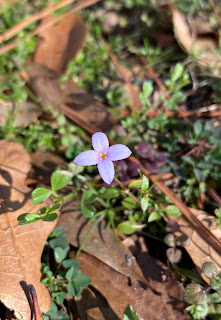
Georgia’s winter weather can be mild at times so spotting an early flower like this annual Houstonia pusilla might be unusual but not impossible. It is, of course, always welcome to get an early flower. Then February came along with some really cold days such that the tub of water that I was accidentally keeping had an inch of ice on it! My grandson enjoyed busting it up.


Houston pusilla
Inch-thick ice in February


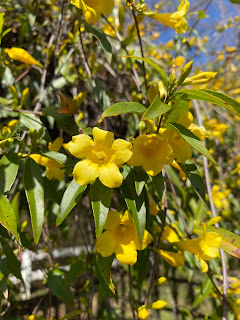
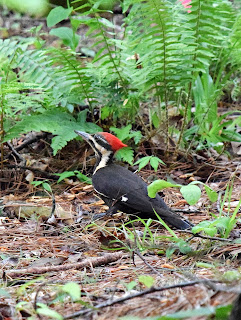
March is a good flower month for us; this is my neighbor’s arbor of Carolina jessamine (Gelsemium sempervirens) looking pretty awesome. In April, one of our resident pileated woodpeckers enjoyed looking for bugs in fallen logs on our property.

Gelsemsium sempervirens
Pileated woodpecker


Aristolochia tomentosa

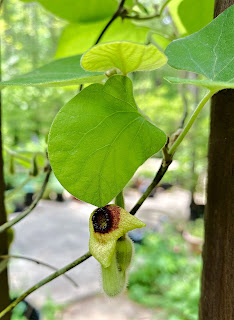
I was thrilled in May to find that my pipevine (Aristolochia tomentosa) was blooming for the first time on my fence. The plant has been there for about 4 years if you’re wondering how long it takes to bloom. The butterflies laid eggs on it 2 or 3 times and we successfully raised a bunch of them, a number of which are overwintering in chrysalis.

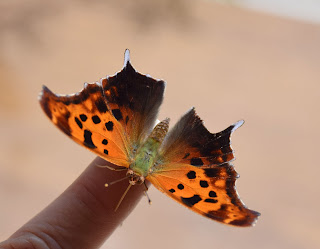
Speaking of butterflies, this Question Mark butterfly showed up in June and I loved the way the sunlight made it glow. This one can overwinter as an adult, but I think this one was probably a fresh one; we have plenty of its host plants in the area: elm, hackberry, and nettles.


Question  mark butterfly


Spring peeper frog

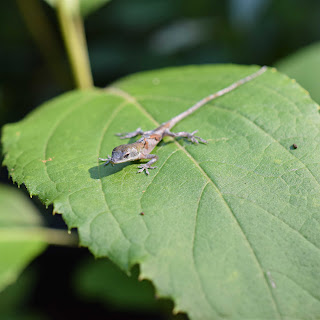
This tiny frog showed up in July and it is one that I’ve never seen before in my area: a spring peeper. I’ll add that to my growing list of identified amphibians that I’ve found here. I’ve found plenty of reptiles too! A young Carolina anole was shedding its skin in August as it hopped through the dense vegetation of summer looking for tiny bugs. 

Carolina anole


This Jamesianthus alabamensis finally bloomed in September. Its common name is Alabama warbonnet and I found it at Plant Life Nursery in Rome. They were growing it from seed that they’d gotten from a customer. Some of our small nurseries really do grow some unique things. You can search this blog for some of my small nursery profiles.

Jamesianthus alabamensis
Late monarch


In mid-October I released the last of about 8 monarch butterflies that I raised. A friend nearby had gotten some caterpillars on her plants and she shared some with me. It was an unusual late summer season in the Atlanta metro area for monarchs, with many folks reporting them later than usual as they passed through Georgia. This one paused before flight on a Eastern silver aster (Symphyotrichum concolor).

This Gentianella quinquefolia is a bit past peak flowering, but it was a new find for me so I get to celebrate finding in November on a hike in North Georgia. I’ll have to go back earlier next year to see it again.

Gentianella quinquefolia
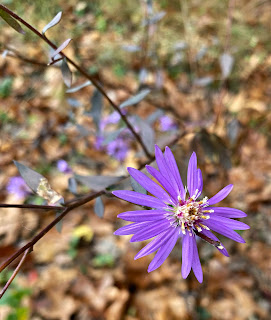
A mystery Symphyotrichum


I end the year with a mystery which has me looking forward to 2022. This pretty aster was still blooming in mid-December in north Fulton County. I posted photos of it to the Southeastern Flora group on Facebook. Based on feedback there and my own research, it might be Curtis’s aster (Symphyotrichum retroflexum). I’m going to try and collect seeds and see if we can better figure this out.

Wishing you a good year in 2022 and more native plants and critters in your daily life.

Sunday, December 19, 2021

George L. Smith State Park


On our way back from Florida this past week, I convinced my husband to depart from I-16 to visit George L. Smith State Park in Emanuel County. This 1634-acre park has a 412-acre lake that was the mill pond for the historic Parrish Mill. It includes a few walking trails and you might even find a gopher tortoise (Georgia’s state reptile) or see a indigo snake. Much of the draw for this state park is the lake where folks enjoy paddling and fishing.


Trees stretched on and on
Pond cypress (Taxodium ascendens)


We did not come prepared to paddle, so we walked around the lake shores a bit, admiring the blackwater and the beauty of the trees reflected in it: pond cypress (Taxodium ascendens), bald cypress (Taxodium distichum), and swamp tupelo (Nyssa biflora). We saw several kinds of native fruits: ogeechee lime fruits (Nyssa ogeche) were floating in the water near the mill while a swamp tupelo (Nyssa biflora) was heavy with fruit. 

Nyssa biflora fruit
Nyssa ogeche fruit


Evergreen plants provided good botanical interest: sweetbay magnolia (Magnolia virginiana), Carolina cherry laurel (Prunus caroliniana), and wax myrtle (Morella spp.) were in several areas. According to a botanical inventory shared with me by Bobby Hattaway, there are actually 3 species of wax myrtle in the park: cerifera, caroliniensis, and pumila.

Cyrilla racemiflora provides color
Vaccinium arboreum


We also saw plenty of tardily deciduous plants showing a bit of color: swamp titi (Cyrilla racemiflora) and sparkleberry (Vaccinium arboreum) both had a nice mix of colorful leaves, while horse sugar (Symplocos tinctoria) had the occasional purple leaf and water oak (Quercus nigra) was a mix of green, yellow, and brown.

I look forward to coming back during spring or summer to see more plants, especially when they are in flower.