Sunday, June 26, 2022

Annual Thoughts on Pollinator Week


Another Pollinator Week finishes up today and—in a week of seeing very few pollinators—I wonder if we're just going through the motions. Those of us pledging to support pollinators, plant native plants, avoid pesticides … we’re the same people each year. Of course a few new people get the message each year but it seems like we’re wiping up a flood with a tissue.

The big contributors to pollinator decline are apparently not the ones we’re reaching:

  • Homeowners who sign up for mosquito treatments, affecting neighbors all around.
  • Businesses who sign up for chemically-soaked landscape services, also affecting others.
  • Cities and counties who approve mosquito-spraying licenses, implement large spraying programs, approve development without conservation, and fail to promote native plants for development.
  • And all of the above that plant non-native plants without a thought to what that means for supporting our native insects and birds.

In my suburban area, I have watched the growing use of pesticides, the increase in lawn-scaped residential properties, and the reduction in native plants that have transformed this area into a fraction of what is needed for a healthy pollinator population. Non-native honeybees have taken up some of the slack, but they do so while the diversity of our own bee populations decline.

  1. What you do in your landscape, what you spray, it doesn’t stay there. A reduction in insects today may be the result of spraying 1-2 years ago.
  2. What you plant matters. Insects can’t reproduce if the native host plants they need are not available.
  3. Convincing other people works. Talk to your family, your friends, your neighbors, your legislators and representatives. Don’t wait for someone else to do it. Grow this movement and educate others about why it matters.


Sunday, June 19, 2022

June 2022 Moment in Nature


I have not seen a lot of bugs this year, but there is one that is strangely in abundance: the ebony jewelwing, a type of large damselfly. I have so many this year that I was able to take some time and really look at them and even photograph them. While I was observing one, she came out towards me to inspect a bit of spiderweb hanging in the air to see if it contained a bug but I think it was just a bit of leaf. #amomentinnature

They are fairly skittish, often flying up from shady corners of the yard before I even have a chance to realize they are there. They usually just fly a short distance and then come back to near where they were. They hunt for mosquitoes and gnats and small insects.

Male jewelwing
Female jewelwing


This website is a great resource to learn more about them. Both males and females have an iridescent green body but the wings are slightly different. The wings on the female are a dark bronze and there is a small white spot at the top (on the forewing). The males overall seem a bit brighter, perhaps slightly more blue-green than green.

Similar to dragonflies, they lay their eggs in water, usually slow moving streams and I have one of those. If you spot one of these near you, be sure to take a moment to appreciate them.

Sunday, June 12, 2022

White Oak Leaf Damage


Questions abound this spring about visible damage to oak leaves, particularly to white oaks, one of our most abundant species in north Georgia. Some trees are so damaged they look like they’ve been sprayed with herbicide. Facebook groups and local extension offices have fielded numerous inquiries about what is happening to the trees and what homeowners should do about it. My trees are similarly infected so I decided to look more closely at what was happening.

White oak (Quercus alba) in my yard showing damage

I won’t take credit for determining that the source of the damage is the solitary oak leafminer. Other folks had already provided links to articles and photos of this moth’s lifecycle. My goal was to confirm that it was this moth’s larvae inside the leaves. I had heard that the insect was feeding inside the layers of the leaf, so I used a pair of sharp sewing scissors and my 10x hand lens to get a look.

The small oak leafminer caterpillar

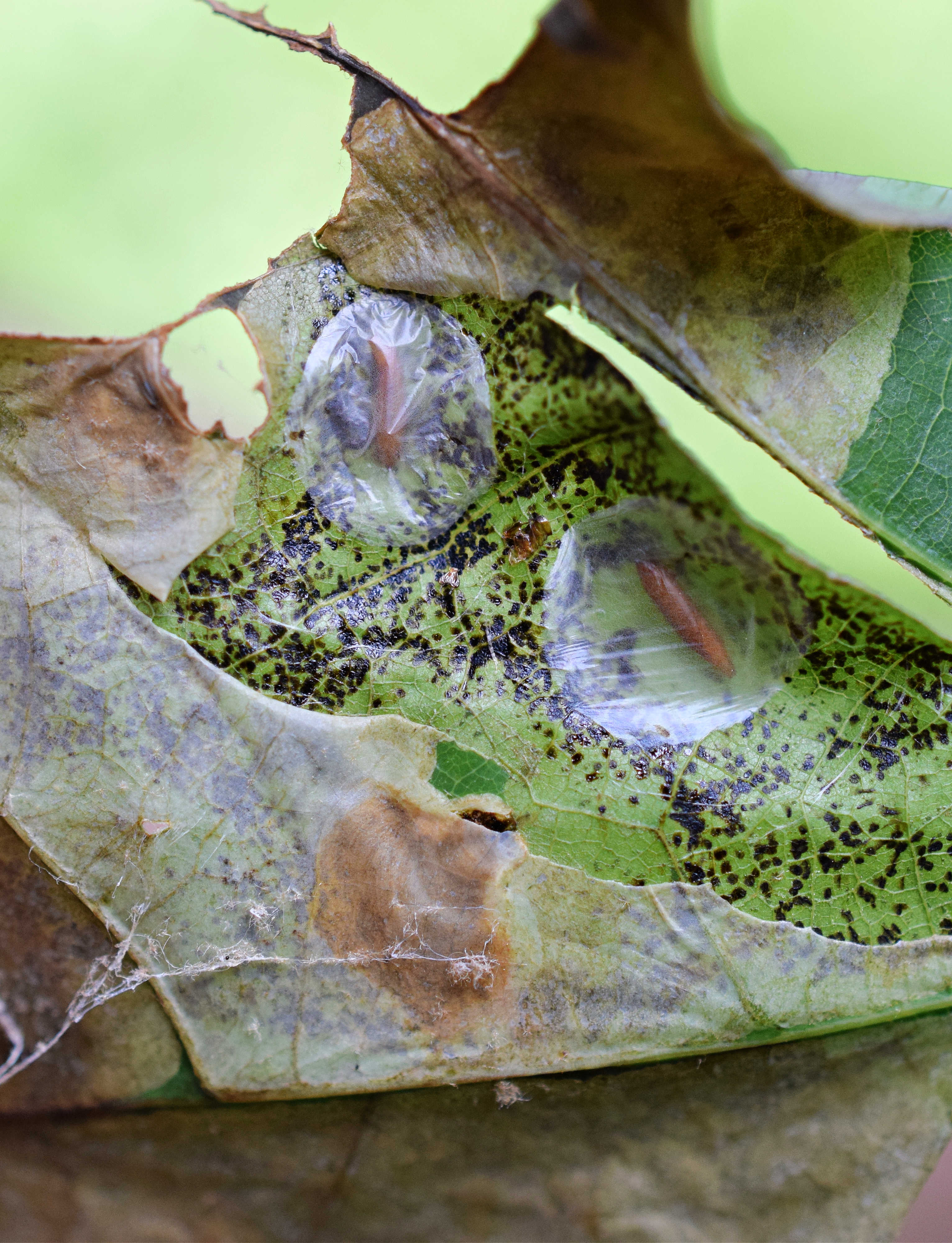
It was clear, for the most part, that the damage only affects the upper tissue layer; the back of the leaf was fully intact. The tiny caterpillar, no bigger than a grain of rice, was feeding on the leaf’s tissue amidst a collection of frass (its own poop). Several of them had formed clear enclosures; these are the cocoons in which the larvae will transform to the tiny moth (microlepidoptera) it becomes.

Forming cocoon
Cocoon completed


The bottom line is that this damage is perfectly natural, doesn’t hurt the trees, is mostly likely short-term, and certainly doesn’t require any chemical responses. While some folks recommend discarding the fallen leaves (to remove the unhatched cocoons), keep in mind that trees all around you will still contribute to the next generation. These kinds of irruptions are normal in nature and will balance themselves.

Sunday, June 5, 2022

Elderberry


The elderberry shrubs near me are having a great year – big growth, loaded with flowers, and apparently spared from the utility contractors’ plans for 2022. Elderberry reminds me of that aunt you’d visit who dressed in a comfortable, eclectic caftan with oversized jewelry, who was always happy to see you and had a great selection of sweet treats. It is a comfortable, welcoming, and rewarding large native shrub for insects, birds, and humans.

Tiny flowers in a cluster (cyme)
Elderberries fill up a space!


Using the latest Flora of the Southeastern United States, I am glad to see our native species is back to being Sambucus canadensis; it was briefly treated as S. nigra ssp. canadensis. The Flora authors have it classified as part of the Viburnaceae family which it shares with Viburnum. It was previously classified as part of the honeysuckle family (Caprifoliaceae). The Flora suggests that species canadensis may one day be further divided into two varieties, with var. canadensis in most of the state and var. laciniata in south Georgia.

Both Sambucus and Viburnum have oppositely arranged leaves but elderberry is distinguished by having compound leaves. Both genera also have cymose inflorescences composed of numerous tiny white flowers that can each turn into a berry, thus creating a large amount of fruit (either for humans or birds).

Plate-sized inflorescences and compound leaves

Elderberries need a large space but I have seen people prune them to a narrower, more upright form. The deer keep mine, which were here when I moved in, from ever getting above knee height unfortunately. I hope one day to have a place for them to thrive. On roadsides, they thrive in moist low areas like ditches. These photos are from a roadside near me; you can see they are under powerlines so every few years the utility contractors knock them back. Thankfully, they always return.

Low, damp roadsides are perfect (and much better with native shrubs)


Sunday, May 29, 2022

May 2022 Moment in Nature


Flowers have been opening for 3 months now in Georgia. From the early trout lilies to the flowers of big shrubs like oakleaf hydrangea, there is something to see every day in Georgia’s native floral show. A round of plants opened up recently that just grabbed my attention: Stop and appreciate us!

So this month’s #amomentinnature is not a single item but a collection of beautiful flowers that are native to Georgia. Flowers that live in my garden and could be in many other Georgia landscapes.


Rhododendron catawbiense (top left) hybrids were having their best year ever with dozens and dozens of blooms.

Sundrops (Oenothera fruticosa) fill the front bed with sunshine (even after I donated 15 of them to a local plant sale!). Upper right.

Indian pink (Spigelia marilandica) is always one of my most anticipated blooms and surprisingly easy to grow. It is so incredibly beautiful. Lower left.

Oakleaf hydrangea (Hydrangea quercifolia) is one of our most well-known Georgia native shrubs and beautiful in all seasons. Lower right.

Get out there and appreciate what's happening and add more to it!


Sunday, May 22, 2022

A Sneaky New Weed


A new weed from South America is showing up in southern lawns and, unfortunately, I am the first person that I know of that has it! I first read about this on a Facebook post by the Alabama Extension Invasive Plant Page on May 12. On May 15, I found it in my lawn. The name of it is skyseed (Chevreulia acuminata). It was first found in the US in 2012 in Alabama but not identified until 2019.

Flower of Chevreulia acuminata

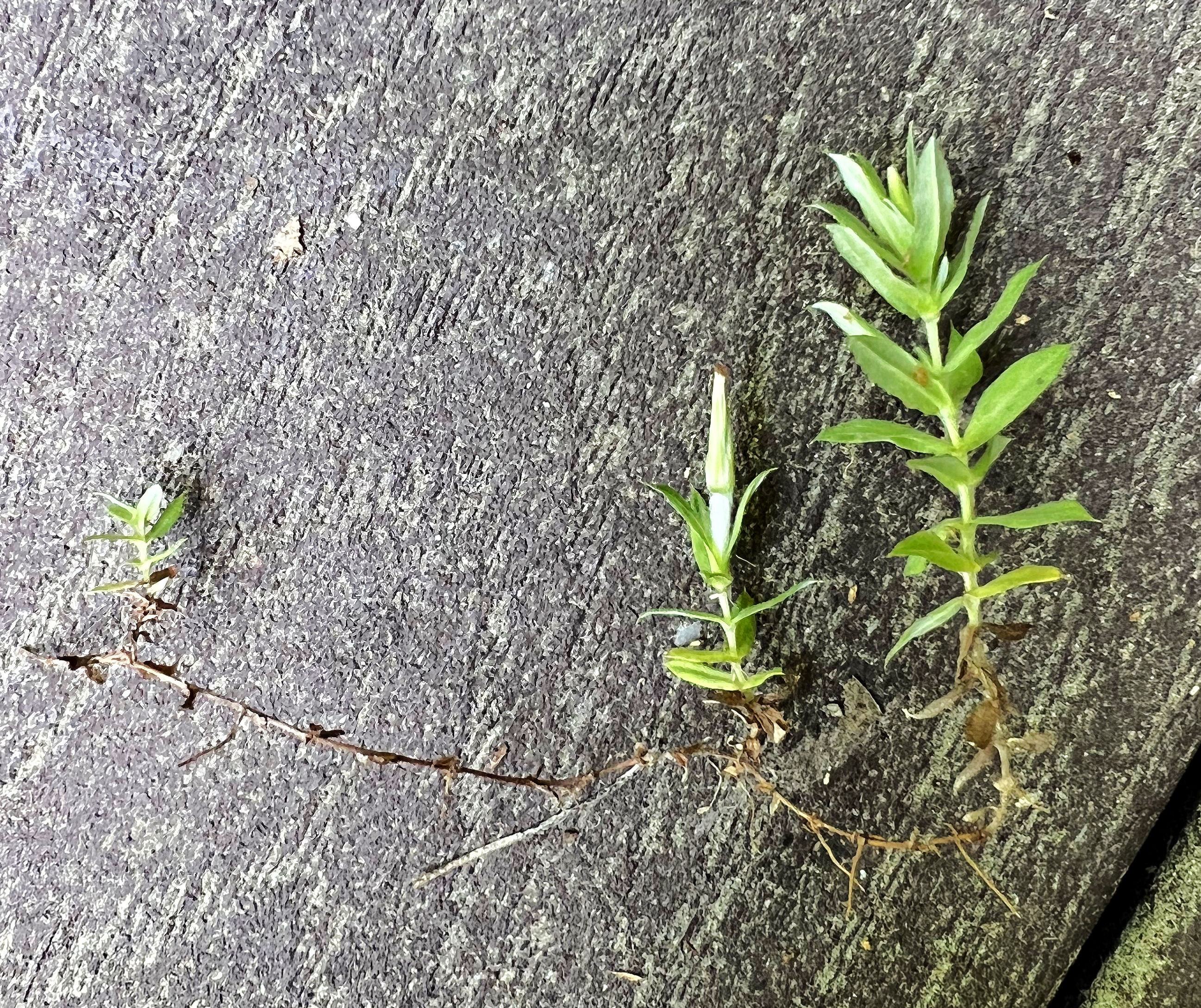
This is a very short, small plant that spreads on thin, wiry stems. In last week’s blog, I talked about leaving turfgrass long enough to shade out weeds and keep the soil cool. Unfortunately, that approach doesn’t stop creeping, perennial plants like this from spreading. The thin, white flowering stems can produce flowers when only a few inches tall, allowing it to hide in the grass.

The flower on this plant appears on a white stem and looks like a seedhead from the moment it opens. Once the flower goes to seed (seemingly in just a few hours!), the seeds are easily detached, making this a tricky one to remove. I know I didn’t get them all.


Creeping stems and emerging flower

Flowers and seedheads look like dandelions

I opted for manual removal, but I’m sure that some stems probably didn’t pull up completely. Over the course of this week, I discovered and pulled new ones every day from an area that is about 3x3 feet. How did it get here? This area of lawn is not near the street; rather it is a small semi-circle of grass near the front door.

Be on the lookout for this sneaky new weed. The puffy flowers/seedheads will probably be the first you see of it. On Facebook, another person reported finding it in Coweta County, a fair distance from my lawn in Cherokee County. She had a good idea for gathering it up: she used her portable vacuum cleaner to get the seedheads!

Typical plant size
With penny for scale


Note: the fluffy seedheads look similar to the annual trampweed (Facelis retusa) but that is a different weedy, non-native plant.

Sunday, May 15, 2022

Why No Mow May is not the Answer


It’s not the answer for Georgia, that is. What was the question? According to a history of the movement, not mowing your lawn in May is a way to benefit early pollinators by preserving early flowers that might be in the spring lawn. The movement started first in the UK (where flowers in lawn are not uncommon) and was adopted in 2020 by residents of Appleton, WI.

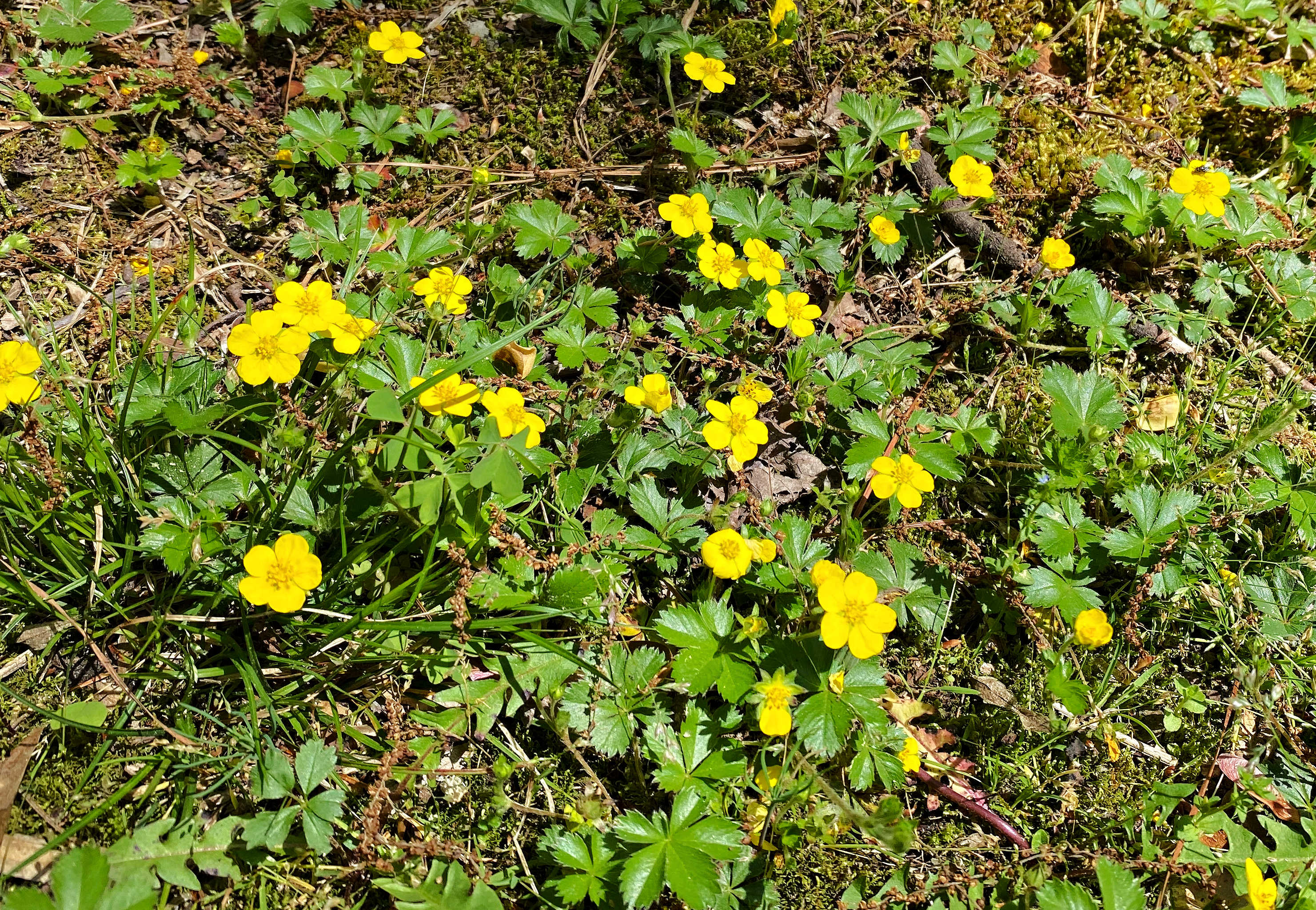
Dwarf cinquefoil (Potentilla canadensis) can be in a lawn
(although not in a lawn in this photo)

While the phrase is very cute and memorable, it is a better consideration for APRIL in Georgia landscapes. By May, most of the early lawn flowers (dandelions, violets, bluets) are done and turfgrass is growing quickly. We would be hard-pressed to convince most neighbors to stop mowing during such active growth. And if you were doing it for the dandelions, please read this to understand why non-native dandelions are not the benefit you might think.

I’d much rather convince people to consider the following (with suggested catchy phrases if you need them):

  • Cultivate less lawn overall (“Less Lawn Daily”) and use the reclaimed spaces for flowering plants that bloom in early spring ("Plant for Pollinators") such as green and gold (Chrysogonum virginianum).
  • Mow less frequently throughout the year (“Mow Monthly”) and reduce chemical use (and save money!).

I have found that with the rise of mow and blow services, lawns are mowed more frequently than they need to be (and I see lawns mowed when they are wet or don’t even need it – consequences of scheduled mowing services unfortunately). Contracts with lawn services mean that these companies mow on their schedule, charging people to mow 1-2 times per week when often a 3-week schedule would work, especially during dry times.  Irrigation and weed/feed treatments also keep lawns growing faster than they need to (more mowing!).

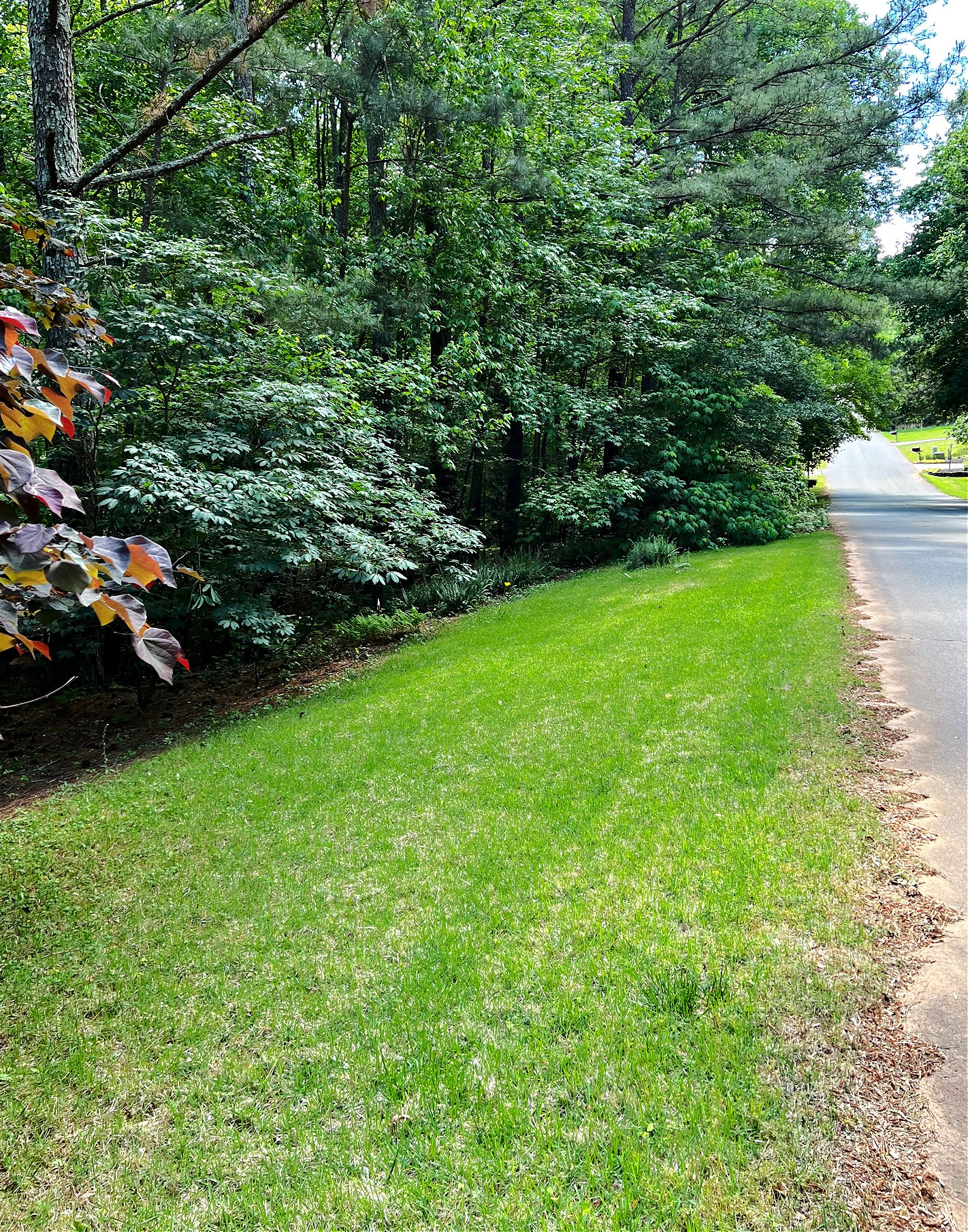
My lawn after 18 years

Don’t let companies that profit from your decisions convince you to apply more chemicals and mow more often than your lawn needs. My lawn was laid from sod in 2004 and almost twenty years later (without fertilizer or irrigation) looks quite good. I leave some extra plants (violets, fleabane, dwarf cinquefoil, and even a few ferns have moved into the more shaded areas) and I hand weed the occasional non-native weeds.

I kept track of my mowing schedule last year for my zoysia lawn. Letting the grass grow a little longer (e.g., 3 inches instead of 2) helps to keep the soil cool, more moist, and suppress weed seeds from germinating. I mowed every 3 or 4 weeks depending on conditions and need. And this year, we switched from gas to a battery mower, another change to consider.

Rethink your lawn not just in May but in every month.