Sunday, February 26, 2012

Native Gingers – a deceptive common name

Common names can be tricky and our native “ginger” is no exception.  These plants are in the genus Hexastylis if they are evergreen and Asarum if they are deciduous.  Neither genus is related to the non-native edible "ginger" plant which is Zingiber officinale.  Other common names for our native gingers include heartleaf and little brown jug, references to the shape of the leaves and to the shape of the flowers, respectively.


Hexastylis shuttleworthii

While four species of Hexastylis are found in the state of Georgia, the species Hexastylis arifolia has the most widespread distribution - it can be found in the mountain regions, the Piedmont area and even in the Coastal Plain.  Even when people don’t know the name of it, many recognize it upon sight as a familiar woodland plant.  The size, shape and pattern of the leaf can be quite variable depending on local conditions.  The fleshy white roots support a small crown from which new leaves emerge each spring.  The old leaves wither and fade away as the new ones unfurl.  Small urn-shaped brown flowers are borne under the cover of fallen leaves, barely opening enough for the pollinators to crawl inside.  It is one of my favorite spring time activities to show these unique flowers to kids and tell them that they are helped in their life cycle by ants.  The seeds are encased in a fleshy coating known as eliasome.  The ants take the seeds back to their nest so that they can eat the nutritious coating, thus dispersing the seeds into different areas.

A very robust clump of Hexastylis arifolia

I have found Hexastylis arifolia to be a very adaptable plant in the garden.  When given adequate morning sun, a single plant can grow into a handsome clump and can serve as a ground cover in sufficient quantities.  Dry conditions may cause it to wilt, but it rebounds nicely when watered.

A more petite member of the family is Shuttleworth ginger, Hexastylis shuttleworthii.  Naturally found along moist areas like streamsides, this species is also very happy in the garden and spreads even more readily in ideal conditions.  The small leaves are usually textured and mottled in rich patterns. Despite the small size of the leaves, the flowers are larger and more showy than others.  Another common name for this species is large-flowered ginger.  The cultivar ‘Callaway’ is considered to be from the variety Hexastylis shuttleworthii var. harperii.


Flowers, H. arifolia
Flower, H. shuttleworthii


Asarum canadense is the only deciduous ginger found in the southeastern U.S. It’s range extends upwards from Georgia, where it is found in just a few counties, all the way north into Canada. Not as well known to Georgia gardeners, this plant is “ginger” to most of the people outside the southeast.  It is a hardy and useful summer groundcover for many northern gardeners.  It differs from members of the Hexastylis genus in several ways – from the thin, deciduous leaves, to the dense hairs on the plant parts,  to the showy red flowers.  A friend shared a start of it with me over 10 years ago and it has grown well in my yard.

Asarum canadense
Flower, Asarum canadense


Now is your chance to spot some evergreen ginger in the woodlands around you. Take note and plan to visit them again as the new leaves expand above and the flowers bloom below.

Sunday, February 19, 2012

Taking Stock of the Flock

I garden for wildlife.  I enjoy blooms and attractive foliage as much as anyone, but my plants do double duty.  My plants support wildlife: birds, bugs, beetles and many others.  So when I spot a native bee head first in a flower or bird winging it’s way through the yard – I feel like I’ve accomplished something.  During the last few weeks of winter, before buds open and I get distracted by spring, I took some time this week to record what birds are hanging around the place.

Turkey
We have been thrilled lately to have a flock of about 20 turkeys wandering through the neighborhood.  They show up in our yard around 8 am, searching the leaf litter for leftover acorns from the tall southern red oaks (Quercus falcata) in the yard.  This week several of the males were fanning out their tail feathers and puffing up their feathers.


This is an appropriate week to take stock of what birds visit my yard because Feb 17-20 is the Great Backyard Bird Count. On that site they have a printable checklist that you retrieve by entering your zip code to get a list of birds that you are likely to see in your area in February.

Hermit thrush


Of course this time of year I will only see the year-round birds and winter residents.  This year I was thrilled to identify (with help!) two new birds for me - a hermit thrush and a yellow-rumped warbler.  Both are only winter residents in Georgia.


Hermit thrushes only eat insects, but this one stopped by the deck to see what all the fuss was about at the bird feeder.  I have since seen him (or her) around the yard on the ground.


Yellow-rumped warbler


The warbler, even though it has similar coloring to the goldfinch, has a differently shaped bill.


The birds that I see are found in predictable places. There are the birds that visit bird feeders (which by the way are a small portion of all the birds): 

Tufted titmouse, Carolina chickadee, and goldfinch.  If you put up a seed feeder, you will see these birds, they visit in droves!


Goldfinch and tufted titmouse


There are the birds that occasionally visit the bird feeder: 


Cardinal, bluejay, red-bellied woodpecker, white-breasted nuthatch, dark-eyed junco, and Carolina wren.

Bluejay

White-breasted nuthatch


Then there are the birds that visit the birdbath but not the feeder because they feed only on  insects: 


Brown thrasher and white-throated sparrow were the two noted this year.  Of course other birds come to the birdbath for a drink or a bath.


Red-bellied woodpecker


Elsewhere in the yard, especially on trees: 


Yellow-bellied sapsucker, downy woodpecker, red-headed woodpecker and even pileated woodpeckers and occasionally an eastern phoebe.


Bluebird


Birds found in open areas: 


American robin, mockingbird, bluebird.  I was thrilled to finally capture this picture of a bluebird this week.


Red-shouldered hawk


Finally, birds seen at a distance or heard: 


American crow, cedar waxwing, black vulture, red-shouldered hawk, barred owl.


I feel lucky to have so much wildlife (in addition to the deer, squirrels and chipmunks!) around my yard and neighborhood.  I know that wooded areas help support them.  I feel sure that having a lot of native plants and not using a lot of chemicals helps as well.  If you'd like to have more birds in your yard, research how you might support them beyond putting out feeders.  You might find some tips in a previous blog that I wrote: Natural Bird Food.

I happened to be at Amicalola Falls State Park yesterday while the volunteers were birds of prey that cannot be released back into the wild.  Two of the birds were ones that hang around my area so I am including pictures that I took of them there.

Barred owl

Black vulture


Sunday, February 12, 2012

Arbor Day in Georgia

Arbor Day is celebrated on different dates throughout the U.S. due to climate differences. For Georgia it is the third Friday in February – this will be February 17th in 2012.  National Arbor Day gets a lot of attention in late April, but in Georgia it is better to plant trees much earlier when trees are dormant, temperatures are cool, and winter rains are possible.


With Arbor Day coming up this week, I’d like to talk about the following three points:

  • Why it’s important to plant trees
  • Why it’s important to plant native trees
  • Why some native trees might be a better choice than others


Importance of planting trees

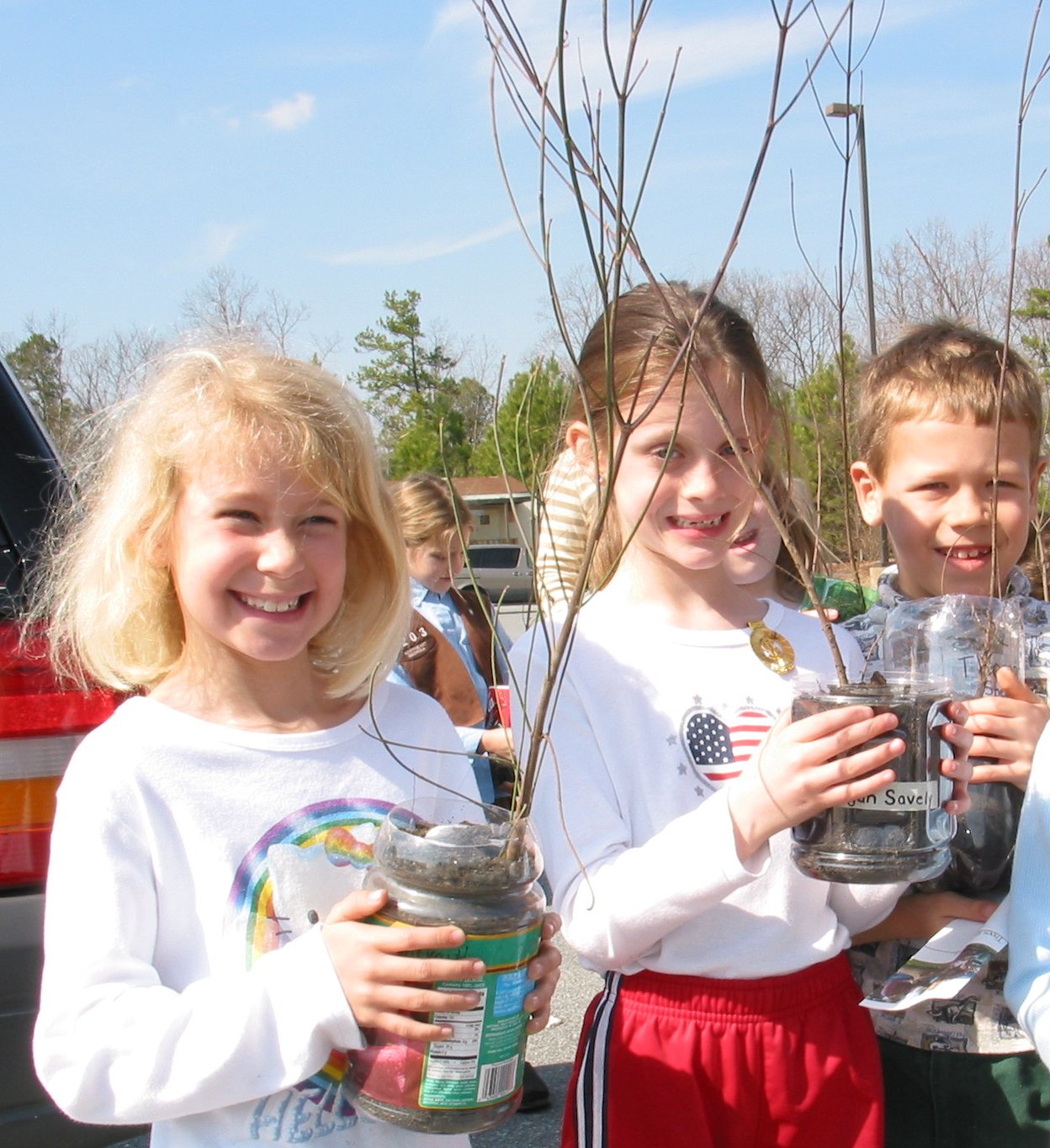
When my kids were in elementary school I would organize an Arbor Day event on behalf of the PTA.  Most years we gave out seedlings that we purchased from the Georgia Forestry Commission.  The kids loved the event, and the older ones could easily answer the question about what benefits do trees provide: Oxygen, shade, food for us and wildlife, shelter for wildlife, beauty, and protection against soil erosion.  They also provide wind breaks, and they can provide privacy.


Why native trees

So you might think that it doesn’t matter what kind of tree you plant, but it does matter.  Native trees support native insects and so they also support the creatures that rely on those insects – the whole local ecosystem has grown up around native trees and it depends on them.  There are insects whose larval form feed exclusively on a plant or group of plants – insects such as the eastern tiger swallowtail butterfly (Papilio glaucus).  Eggs are laid on the leaves of wild black cherry (Prunus serotina) and tuliptree (Liriodendron tulipifera); the caterpillars that hatch will consume a small amount of the overall foliage.  Choosing to plant a non-native tree instead reduces the biomass available for specialized insects, resulting in fewer insects overall.  There are studies that show that specialized native insects (most of what we have) cannot adapt to eat non-native plants. Fewer insects equals less food available for the birds that feed these caterpillars to their chicks.  


Why some native trees are better choices

In the paragraph above I talked about why choose a native tree over a non-native one.  Now I'll like to talk about why choose particular native trees rather than just "any" native tree. Think "native" on a smaller scale - the environments in which you live need the indigenous plants that support them.  For example, growing blue spruce (Picea pungens) in north Georgia adds nothing to the local environment - it is as alien to the insects that live here as a plant from Europe because it is native to the western United States.


Consider also diversity when choosing a tree.  If your area is full of oak trees, consider planting something else instead of another oak.  Doug Tallamy, entomologist and author of Bringing Nature Home, has created a top twenty list of woody plants (and perennials) for the mid-Atlantic region.  This list is based on the number of different species of Lepidoptera they support - those caterpillars that the birds love to eat!  While oaks are first on the list, adding a hickory (Carya sp.) or birch (Betula sp.) to your yard would allow you to support much more biodiversity.  

Take a survey of not only your yard but the areas around you to see what native trees are already there.  But don't that list stop you from indulging in something you love like the iconic flowering dogwood (Cornus florida) or the early flowering redbud (Cercis canadensis).  If you want to attract more birds to your yard with fruiting trees then consider serviceberry (Amelanchier sp.) and hawthorn (Crataegus sp.).

So when Arbor Day comes this Friday, consider planting a tree for all the right reasons.  And if you have kids or grandkids, be sure to involve them and talk about the reasons that we plant trees and conserve them.

Eastern tiger swallowtail butterfly (Papilio glaucus)

Sunday, February 5, 2012

A Walk in the Winter Woods

This week I had a chance to go on a field trip with the Georgia Botanical Society to observe some of the native woody plants in their winter garb.  I like to observe plants in the winter – without the distraction of leaves and flowers you can appreciate some of the other characteristics of the plant.  In fact there are a few plants that I can identify faster in the winter!

Amelanchier sp. bud in winter

We started out by looking on the ground for clues that would help us understand some of the trees that were there.  The ground was covered with oak leaves, acorns, acorn caps, small twigs that had fallen to the ground; even though the trees soared above us, these items helped us figure out what they were.  There were 3 types of oak leaves: southern red oak (Quercus falcata), scarlet oak (Quercus coccinea) - later confirmed by acorns found - and white oak (Quercus alba).  We talked about the variable leaf shapes (especially on the southern red oak which had various numbers of lobes on different leaves), how the sinuses can be deeper on leaves that grow at the top of the tree where sunlight is more plentiful, and how oaks in the red oak group of the genus have bristle tips.  We also discussed acorn differences such as the early sprouting white oak acorns and the differences in the caps.  Later we found some sprouting scarlet oak acorns and observed the distinctive rings around the base of the acorn.  We also found some black oak acorn caps (Quercus velutina) and leaves from chestnut oak (Quercus montana). Someone also found an old flower spray from a sourwood (Oxydendrum arboreum).  The ground has a lot of clues!

We walked along and found some young trees that were small enough for us to examine their twigs.  Twigs are the most recent growth on the branch.  Leaf arrangement on a woody plant is a key identifier – all good tree identification books have keys, and leaf arrangement is usually the second question (first question is whether it is evergreen). Even without leaves, leaf arrangement is visible not only from the leaf buds but also from the branching structure of the tree.  We looked at the shape of the leaf buds and the leaf scars that were left behind from the previous year’s leaves.  Sometimes the leaf scar is no longer clear enough to make out characteristics like bundle scars; we ripped off one of the leaf buds on a tuliptree (Liriodendron tulipifera) so that we could get a look at the bundle scars.  One of the young trees we found was a black cherry (Prunus serotina) so we were able to examine the smooth bark with the numerous lenticels that is so distinctive of this very common species.

Something gets a closer look

We found a pair of young pine trees close together.  Because they were different species, we could compare the differences in the length of the needles as well as the number of needles found in each bundle.  Loblolly pine (Pinus taeda) has 3 needles per bundle while Virginia pine (Pinus virginiana) usually only has two; in addition, the Virginia pine’s shorter needles are a bit twisted.  Later, someone found a branch from shortleaf pine (Pinus echinata) on the ground and we were able to see the needles were similar to the Virginia pine but not twisted and a little bit longer.

As we walked further we found two plants growing so close together that it was a good reminder to make sure you separate the branches before trying to key it out.  This pair was a native azalea (Rhododendron sp.) with fat bloom buds, and a dogwood (Cornus florida) with no bloom buds.  The dogwood has opposite leaf arrangement while the azalea has alternate - you'd be going down the wrong key if you picked the wrong branch.

Hamamelis virginiana
Next we found some witch hazel (Hamamelis virginiana) which opened up the topic of bud scales.  Witch hazel leaf buds have no scales – what you see are the leaves themselves.  We were fortunate to find one that had bloomed in November – we could still see the flower structure as well as seed pods from the previous year.  Witch hazel seeds take a full year to develop – a rather unusual characteristic.  Nearby there were two species of hickory growing side by side.  Using our hand lens we found the distinctive yellow (some say “silvery”) dots on the slender twig and bud scales of sand hickory, Carya pallida.  The stout twigs and buds of the mockernut hickory (Carya alba) needed no hand lens to identify!

Viburnum acerifolium

Leftover fruit is a good way to identify things.  We found a mapleleaf viburnum (Viburnum acerifolium) that had a few fruits still clinging to the leftover umbel-like structure that was the flower.  This was helpful in distinguishing this opposite-branching plant from the more common red maple (Acer rubrum) which is also present in the area.  The viburnum also had some plump terminal buds that were clearly going to become flowers, another difference from the maple.  Nearby was another plant with fruit as well as some old leaves: sparkleberry (Vaccinium arboreum), the most tree-like of the blueberries.

Just a bit further was a young sweetgum (Liquidambar styraciflua).  The bright green twigs and shiny green buds were the only part of the tree not covered in thick corky growth.

We also had a chance to see some perennials – evergreen ones like heartleaf ginger (Hexastylis arifolia), the cranefly orchid (Tipularia discolor) and ferns like Christmas fern (Polystichum acrostichoides).  Everybody likes a little green in the winter!

So while you’re waiting for spring to come along, have a walk in the woods and see what’s there.  Don’t be intimidated by the lack of leaves! Identification clues are there for those that look.

P.S. The state and national parks are great places for a hike.

Folks compare notes during the walk

Sunday, January 29, 2012

Native Vines Grow on You

While I have a number of native vines in the natural area of my yard, it was several years before I decided to add new ones to the landscaped areas.  Perhaps I was a little afraid that a vine would be too aggressive.  Eventually, their beauty overcame any fear – I wanted to see the large and colorful blooms of crossvine (Bignonia capreolata), to support hummingbirds with the red tubal flowers of our native honeysuckle (Lonicera sempervirens), to delight my visitors with the delicate bells of our native leather-flower (Clematis viorna), and to be wowed by the springtime show of Carolina jessamine (Gelsemium sempervirens).

Pale passionflower, Passiflora lutea

I also learned more about how they support native wildlife: from hummingbirds and insect pollinators to birds that eat their berries and insects that feed on their foliage.  I was inspired by Doug Tallamy’s story about growing Virginia creeper (Parthenocissus quinquefolia) just so that he could observe the larvae of the Pandorus sphinx moth (Eumorpha pandorus).  I decided that planting more vines would increase the diversity of host plants to support insects that feed on foliage.

The first thing to consider about vines – as it would be for any kind of plant – is how they grow.  For vines that means considering HOW they climb.  Each vine has its own way of climbing:


Twine – a vine that twines will physically wrap itself around small branches or trunks of other plants or around supports provided by the gardener.  Trying to grow such a vine next to a solid wall without any twine-able support would be an exercise in futility.  Honeysuckle (Lonicera spp.) and Carolina jessamine (Gelsemium sempervirens) are two that twine.

Lonicera sempervirens

Cling – a vine that clings will physically attach itself to a wall, a fence or another plant.  This same vine may cause damage to structures when you try to detach it!  Virginia creeper (Parthenocissus quinquefolia) and wood vamp (Decumaria barbara) are both clingers; the creeper clings with little adhesive discs while the vamp clings with aerial roots.

Parthenocissus quinquefolia

Decumaria barbara


Tendril – a vine with tendrils anchors itself to another plant or thin support via curly tendrils.  Vines like grape (Vitis spp.) have very thick tendrils while clematis (Clematis spp.) have thin tendrils.

A grape latches onto a nearby oak sapling


Ramble – a vine that rambles is really a shrub with long branches and usually requires physical support (e.g., tying it to an arbor or structure) initially.  Roses are ramblers.


Knowing the difference in how they grow helps me quickly identify two evergreen vines in the wild: Gelsemium sempervirens (a twiner) and Bignonia capreolata (a clinger).  But as I said, the real reason to know is so that the environment that you place them in will be one where they can thrive.  Unfortunately, I speak from experience!

Passiflora lutea waltzing through my plumleaf azalea

If you select a vine that twines or has tendrils, be sure to provide some support for the vine or it will twine all over itself and make a bit of a mess.  You can use a fence with slender rails, a metal trellis, or you can even supplement the area with sturdy twine or rope stretched out in a vertical fashion.  I've seen the native coral honeysuckle (Lonicera sempervirens) twine throughout a chain link fence beautifully - the fence was almost obscured.  Of course you can let the vine scramble over other shrubs or small trees if you like.  Passionflower (Passiflora spp.) is perennial but not woody so it takes a different path through my shrubs every year as it grows.

If you select a vine that clings, be sure to consider where it is going to cling.  Allowing a vine to cling to a wooden house is not recommended as it could collect and hold moisture, permitting some rot over time.  But a clinging vine can happily climb up a tree if you like.  I recently trained Virginia creeper to climb up my store-bought landscape blocks.  I'm looking forward to having it improve the looks of those boring concrete blocks.

That's all there is to understand - now you can consider what native vines you might like to grow!  Most vines do love sun.  They will tolerate some shade but you may not get the amount of blooms that you want. Here are some of the ones that I would recommend:

Crossvine - Bignonia capreolata: clings, evergreen, large and colorful trumpet-shaped flowers in spring.
Coral honeysuckle - Lonicera sempervirens: twines, semi-evergreen, bright red flowers for hummingbirds in summer.
Carolina jessamine - Gelsemium sempervirens: twines, evergreen, early flowering spring vine, can be aggressive.
Passionflower - Passiflora incarnata (purple) or P. lutea (yellow): tendrils, host plant for Gulf Fritillary butterfly.
Leather-flower clematis - Clematis viorna: tendrils, unusual flowers. Good reference here.
Virgin's bower clematis - Clematis virginiana: tendrils, white flowers, can be aggressive.
Virginia creeper Parthenocissus quinquefolia: clings, decorative blue berries, outstanding fall color.
Wood vamp - Decumaria barbara: clings, semi-evergreen in protected areas; also known as climbing hydrangea.
Rose - Rosa setigera: rambles, has rose hips for wildlife.
Wisteria - Wisteria frutescens: twines, blooms at a young age, not as aggressive as the Asian species, but also not very fragrant. Generally sold as a cultivar like 'Amethyst Falls'.

Cultivars are available now for many native vines, and I've heard that even some of the trumpet creeper cultivars (Campsis radicans) are not as aggressive as the species.  I'll believe that when I see it - that's a vine that really should just be grown on telephone poles!

Parthenocissus quinquefolia
Passiflora incarnata


Campsis radicans

Lonicera sempervirens


Sunday, January 22, 2012

The Promise of Spring

The grey days of January can be a discouraging time for the gardener.  The once bright and crisp leaves of fall have faded to brown and lie crushed and torn on the ground, belittled by winter rains, freezing temperatures, and time itself.  Deciduous tree limbs are bare, and perennial flower stalks rattle in the wind, their seeds mostly gone now.  Native plants need this time to develop their roots and resources.  But in Georgia, if we look hard enough, we can still spot the promise of spring.

Hepatica nobilis var. obtusa


Last weekend I spied my first Hepatica americana bloom (now Hepatica nobilis var. obtusa) – right on schedule.  I was sorry to note that this was the second bloom, the first had already faded and was forming a seed capsule.  I went walking to see what else I could find.
Antennaria plantaginifolia


As my feet moved along the path, the decomposing leaves fluttered to the side, revealing the grey-green foliage of Pussytoes (Antennaria plantaginifolia).  These and other semi-evergreen plants like fairywand (Chamaelirium luteum) and green and gold (Chrysogonum virginianum) patiently tolerate the loose leaf cover; if you look closely, you can see the buds of new leaves already formed, waiting for the longer days and warmth of spring.


Evergreen gingers like Heartleaf (Hexastylis arifolia) and Shuttleworth (H. shuttleworthii) are getting the last bit of use out of their leaves. New leaves will replace these fading ones which are a bit tattered and droopy now.  As spring gets closer, sometimes I pull away the leaf duff to see if the flowers are visible yet. It’s a demonstration of my impatience – I love the hidden flowers of our native gingers. Perhaps I should keep a journal to remember which day they will bloom.

Hexastylis arifolia


As I make my way around the back of the house I notice that elderberry leaves (Sambucus nigra ssp. canadensis) are emerging already along the pale stems.  One of my St. John’s wort species also has tiny new leaves already. The blue-green foliage of the columbine (Aquilegia canadensis) soaks up the sun; it never really disappears either.  Above it, the flower buds on the blueberries (Vaccinium sp.) are plump in expectation of flowering in the next month or so; their flowers are some of the earliest, timed to nourish the bumblebees emerging from hibernation.

Blueberry, Vaccinium sp.

I see the berries are ripening on the wax myrtle (Morella cerifera) – turning a beautiful shade of blue-grey. Juniper berries (Juniperus virginiana) are ready for the birds that love them - birds like cedar waxwings, bluebirds, and robins.  And while I was looking at the berries, I saw that the new cones are forming on the juniper, no different than the flower buds already waiting on the tips of the dogwood (Cornus florida) branches.

Berries on Morella cerifera


New cones on Juniperus virginiana


And on the deck, stashed in rows of 1 gallon pots, is one of my favorite promises: the tender foliage emerging from the seed of a red buckeye, Aesculus pavia.  Yes, spring is on the way, but it does need every moment of winter to get ready for it -- I'll wait right here.

Seedling Aesculus pavia

Sunday, January 15, 2012

Native Evergreen Conifers in North Georgia

As a companion piece to my posts last year on Winter Twigs and Leaf Identification, this post gives some tips for learning how to identify some of the more common native evergreen conifers that grow in north Georgia.  As you may know, not all evergreens are conifers (think of hollies and rhododendrons), and not all conifers are evergreen (think of bald cypress). But since most conifers ARE evergreen, we've got a few things to work with here.

Blue-green foliage of white pine


Tsuga, hemlock


In the great kingdom of Plantae, conifers in Georgia are found in the Division Coniferophyta, in the Class Pinopsida, and in the Order Pinales, which has five families.  And within the Pinales Order, only two families are represented in Georgia: Cupressaceae and Pinaceae.  That is to say, there aren’t many conifer families in Georgia!  Of note: we are just outside the natural range of Abies (fir) and Thuja (arborvitae).


Tsuga canadensis foliage
The Pinaceae family is where most of Georgia’s evergreen conifers reside yet it is represented by just 2 out of the nine genera here: Pinus and TsugaTsuga, known as hemlock, has two species: Tsuga canadensis is more prevalent than Tsuga caroliniana.  Hemlock is very shade tolerant and is generally found in mountain communities, but it does fairly well in gardens as well.

Hemlock is easily noted by its flattened, short needles; it's graceful, drooping form; and by the tiny, flexible cones it produces. The needles are single and are two-ranked along the stem, meaning they reside in a horizontal plane.


Pines have round needles that surround the stem (not two-ranked), often lose their lower branches over time, and have stiff cones that sometimes have prickles.  The needles are arranged in bundles along the stem.

With the common pines of north Georgia I find that looking at the needles is the quickest way to make an identification.  If you were to look at a list of the pines (Pinus spp.) that are native to Georgia, this might seem a little daunting. But if you live in north Georgia like I do, there are really only four and, with just a little help, I think you can learn to tell them apart.  If you live elsewhere, perhaps you can pick some tips on how to identify them in general.

The four pines that you are likely to find in north Georgia are: Pinus echinata (shortleaf pine), Pinus strobus (eastern white pine), Pinus taeda (loblolly pine), and Pinus virginiana (Virginia pine).  The needles are arranged in bundles within a fascicle at the base of a bundle, so you need to examine how many there are, how long they are, and if they are straight or twisted.

From top to bottom, the picture above shows:

loblolly (usually 3 needles per bundle, length is 5-8 inches); 
eastern white pine (5 needles per bundle, color is bluish-green); 
shortleaf pine (2-3 needles per bundle, length is 3-4 inches); 
Virginia pine (2 needles per bundle, needles are short and twisted).


Below are some pictures of the cones:
Pinus taeda: large cones with prickles

Pinus strobus: long cones, no prickles

Pinus echinata, short cones stay on
tree; small prickle

Pinus virginiana, short cones stay on
tree but prickle is long and sharp


White pine branches


White pine does have one interesting growth characteristic - the branches tend to encircle the tree, like spokes on a wheel. So, if the branches are intact, you might be able to confirm it by looking at the trunk.

By the way, pines do lose their leaves (that is, their needles), just not all at once.  The loblolly pines in my yard drop some needles in the fall, about the same time that deciduous trees are dropping theirs too.


The Cupressaceae family is represented by 3 genera in Georgia: Chamaecyparis, Juniperus, and TaxodiumTaxodium, a genus perhaps most familiar to people by the species Taxodium distichum (bald cypress), will not be covered here because it is deciduous (a trivia question for your family: "Name a deciduous conifer"). Chamaecyparis is represented in Georgia by Chamaecyparis thyoides (Atlantic white cedar) but that is not indigenous to north Georgia (although people do grow it here). That leaves us with Juniperus virginiana which is found throughout Georgia; however, it is best known by its common name, eastern redcedar.  People are often surprised when you tell them it is a juniper.

I learned something when I was researching Juniperus virginiana for this article.  I was certainly familiar with the plant - it grows everywhere around here, and I've dug up many a small one. However, I had not seen one with fruit so I decided to try and find one.  I looked at a lot of trees before I found one, but I was puzzled when I did.  The foliage didn't look right.  As I dug into my references a little deeper, I found the answer.  The mature foliage is different!  Juvenile foliage is needle-like and prickly - what I was used to seeing; the mature foliage is "awl-like" and scaly with overlapping sections - not prickly.

Berries and mature foliage, Juniperus virginiana
Juvenile foliage, Juniperus virginiana


It is also curious to think that junipers have berries - why would a conifer have berries instead of cones?  Well, the "berries" are actually cones with fleshy scales that have fused together, creating the appearance of a berry.


So now that you know a little bit more about identifying these plants, spend some time outside practicing your identification skills.  Those fragrant green trees with needles are not all alike; the differences are there for you to discover.


Good tree identification references for the southeastern U.S.:

Native Trees of the Southeast: An Identification Guide by Kirkman, Brown and Leopold
Woody Plants of the Southeastern United States by Ron Lance
Guide to Southern Trees by Harrar and Harrar (Dover publication) – you can get this used on Amazon for as little as $1.50 plus shipping; it’s a great starter for young people and the line drawings are excellent.