Sunday, May 7, 2023

Native Evergreen Rhododendron


People ask about evergreen shrubs for their landscaping, but I don’t see our evergreen rhododendrons get used as often as they should. This week I had a chance to see some of them blooming when I visited Nearly Native Nursery in Fayetteville. They were at peak bloom, and seeing them reminded me how beautiful they can be.

Rhododendron catawbiense

The first one I spotted was a dark color form of Rhododendron catawbiense, a northern species found in both NW and NE Georgia. Jim (the owner of the nursery) said that Cloudland Canyon State Park is a great place to see this species in the wild.

Rhododendron carolinianum


The next one I saw was a pale pink rhododendron with smaller leaves; I asked if it was R. minus but he said no, this was Rhododendron carolinianum, which has been considered as a variety of minus in the past. In Georgia, it is only in the very NE corner. The flower is a little bit smaller than R minus.

He had a beautiful specimen of Rhododendron minus blooming as well. I have seen it in the wild several times in Georgia; May is the perfect time to see it. It has a surprisingly large range in Georgia, from the NE to the SW.


Rhododendron minus

One other species is found in Georgia: the great laurel (Rhododendron maximum). And while all of these species are quite deserving of a place in our gardens, they are very hard to find in nurseries. You can find rhododendrons in the nurseries, but they are mostly hybrids and it’s very hard to figure out their parentage because sometimes even the parents are hybrids. Even cultivars with names like 'Catawbiense Album' and 'Catawbiense Boursault' hint at only partial parentage with a native species.

It’s time for someone to get back to propagating native evergreen rhododendrons without hybridizing them with non-native species so that gardeners can get these beauties into their landscapes.

Sunday, April 30, 2023

More on Deer Resistance


I wrote a general blog post about dealing with deer in 2011; all of it is still true so if you haven’t read it, please do. I talked about understanding what they like, plant placement, and deterrents (both physical and chemical). I didn’t get into a lot of specifics about what plants might be deer resistant. So here I am, 12 years later, ready to give some ideas based on my experiences in the metro Atlanta area.

Let me stress that last sentence: these are ideas based on my experience. Claims of deer resistance vary widely. You’ll find people who say XYZ is resistant while in my yard that is not true (I just got a mail from a nursery saying that coneflower is deer resistant: not in my yard!). As someone once said to me: “They’ll try anything once.” Very few plants will be absolutely resistant but there are some general recommendations. In some respect, you have to find your own way, figure out what works for you and your deer. For that, fall back to the 2011 article. Let’s start from the ground up:

Groundcovers

  • Green & gold (Chrysogonum), partridgeberry (Mitchella repens), pussytoes (Antennaria), dwarf cinquefoil (Potentilla canadensis), golden groundsel (Packera aurea), violets (Viola), moss phlox (Phlox subulata), and native pachysandra (Pachysandra procumbens).

Pachysandra procumbens

Perennials/Annuals

  • In the sun: Penstemon, red columbine (Aquilegia canadensis), anise hyssop (Agastache), things that are minty and smelly like Monarda and Pycnanthemum, camphorweed (Pluchea), blue mistflower (Conoclinium coelestinum), golden ragwort (Packera), scarlet sage (Salvia coccinea, Salvia lyrata), starry rosinweed (Silphium asteriscus), Stokes’s aster (Stokesia laevis), wingstem (Verbesina alternifolia), late thoroughwort (Eupatorium serotinum), and American germander (Teucrium canadense).
Penstemon is great for bees too


  • In the shade: mayapple (Podophyllum peltatum), bloodroot (Sanguinaria canadensis), rue anemone (Thalictrum thalictroides), wood anemone (Anemone quinquefolia), white snakeroot (Ageratina altissima), blue-eyed grass (Sisyrinchium angustifolium), and Georgia savory (Clinopodium georgianum).

Ageratina altissima

  • In general, native ferns, native grasses, and sedges (Carex)

  • Things I manage with 2-3 sprays during the growing season but some may still get munched: Trillium, foamflower (Tiarella), and toothwort (Cardamine).
  • Some things will be nibbled early in the year but may still get a chance to bloom later – that is particularly true for some of the annuals whose drive to bloom is supreme.
Christmas fern

Shrubs and Trees

  • General comment on trees: any browsing will be done on the lower branches so once something gets tall enough, it’s usually ok.
  • Deer damage includes rubbing in the late summer by male deer (because of antlers) so if you have a young special tree or shrub, consider enclosing it with wire fencing for a while.
  • Beautyberry (Callicarpa americana), doghobble (Agarista populifolia), spicebush (Lindera benzoin), St. John’s wort (Hypericum), paw paw (Asimina), buckeye (Aesculus), Florida anise (Illicium), blueberry (Vaccinium), dwarf witch alder (Fothergilla), summersweet (Clethra), yaupon holly (Ilex vomitoria), and wax myrtle (Morella).
Clethra alnifolia in early summer

  • Some browsing on Viburnum and mountain laurel (Kalmia latifolia); you might be able to manage this with sprays/deterrent. Forget about Hydrangea and native azaleas!

If you have some deer resistant plants that I didn’t mention, feel free to add a comment so everyone can learn.


Sunday, April 23, 2023

April 2023 Moment in Nature


I love to walk through the natural areas of my property in the spring to see what is sprouting (and to find non-native weeds that need pulling). It is naturally a slow walk as I focus on the ground. As I walked through one area this past week, I heard a low buzzing and spotted a large bee checking out the sloped sides of a drainage ditch, slowly going from one area to another. It was as large as a carpenter bee but it had a fuzzy butt instead of the ‘shiny hiney’ of a carpenter bee.


The bee was checking out crevices and leaf litter. I realized that it must be a queen bumble bee, looking for a cavity to start her new nest. I've never seen a queen before and was a little bit in awe. It is amazing to find new things in nature. She is #amomentinnature for my April.

I hope she found a good spot. A few days later, I saw another one near the creek. Bumble bees are an important part of pollination, especially during the summer, and I am happy to share my home with them.

Sunday, April 16, 2023

Plants On The Move?


This is an observational post not rooted in science, but it is about roots that seem to be able to move around in my garden. I have lived here for 20 years and in all those years I have monitored my trilliums like an obsessive plant mom. There were just a few Sweet Betsy trillium (Trillium cuneatum) here when I moved in, and I noticed that deer would occasionally munch one so I started spraying them with Liquid Fence every spring.

Trillium luteum on the move

Of course I also added more as I acquired them, either from plant rescues or gifts from friends. One species in particular that I added was a group of yellow trillium (Trillium luteum), a sweet-smelling species that is not native to my area but which are found in moist soils especially over calcareous rocks. These plants were all set out into a 3x3 area. Over the years, I noticed that the population seemed to dwindle a bit (and like others, I wondered if perhaps they were just kaput).  

Over the last couple years, I believe I have found the missing trillium. They have been popping up in places near and far, only recognizable once they got big enough to bloom (their mottled foliage looks very similar to my native T. cuneatum). The furthest one was in my neighbor’s yard, about 50-75 feet away from the original planting (and on the other side of their driveway). I have now found about 7 of these Trillium luteum throughout my property, all confirmed as genuine by their flower and smell.

So how did they get there? I think that critters transported them: either underground critters like moles/voles (both of which I have) or via chipmunks/squirrels (plenty of those too). Trilliums can grow from damaged rhizomes so they may only have had to take a piece/offset of it in order to get a new one growing many feet away from the original spot.

So if you’re missing any bulb plants, perhaps you’ll find them one day somewhere else! In future, I might add a little PermaTILL to my planting holes to help deter the critters.

Sunday, April 9, 2023

Green and Gold Name Updates


Plant name changes happen from time to time; sometimes they vex us ordinary folk (like the Cornus florida change to Benthamidia florida), some are insightful (like the Tiarella changes), and some just make sense. I recently became aware of changes to the species level names for the perennial commonly called Green and Gold (Chrysogonum), and I think it is a positive change.

Green and Gold

Prior to the change, Green and Gold (Chrysogonum virginianum) had 3 varieties: var. brevistolon, var. australe, and var. virginianum. (Note: the term “variety” is actually part of scientific nomenclature. From Wikipedia: “In botanical nomenclature, variety (abbreviated var.in Latin:varietas) is a taxonomic rank below that of species and subspecies, but above that of form.”) An excellent description of the three varieties can be found at this Clemson link.

Chrysogonum repens


Chrysogonum australe


Chrysogonum virginianum


Their growth habits are distinctively different yet the plants were often lumped (at least on plant tags) into one name: Chrysogonum virginianum. That practice was quite annoying to those of us who really wanted a specific variety. One year we ordered 25 plants for the plant sale, expecting they were the short-stolon var. brevistolon, but when they arrived from the grower it was clear they were the long-stolon var. australe. We sent them back.

Figure 1 from referenced article


The research supporting the change (particularly of var. brevistolon to repens) is summarized in an article by Guy Nesom with excellent range details for those of us who have found it in the wild in Georgia (see Figure 1 above). For those of you who don’t normally look at vouchered specimens of actual plants, the article includes quite a few and they help to illustrate the differences (especially how much taller C. virginianum is).

Chrysogonum key from Weakley Flora 2022

So now I'll relabel all my photos and hope that growers will consider actually using the names correctly in the future. If you don't grow this plant, by the way, do consider adding it to your spring shopping list; it is a fantastic and dependable native perennial.


Sunday, April 2, 2023

An Update to Plant Sales in Stores


This post is a follow up to last week’s blog entitled “Native Plants for Sale in Regular Stores.” After I wrote that post, I decided to write an email to Home Depot’s southern division about stocking native plants. They followed up with an email invitation to discuss, and I spoke this week to one of their Live Goods employees for this area. It was a nice conversation, and he told me about how they have tried to incorporate more native plants (including signage), particularly in Florida and Louisiana but the efforts have not been productive.

Virginia sweetspire (Itea virginica) is great for home designs

The one new-to-me aspect that he wanted to mention was their online sales, a concept that that was unfamiliar to me for buying plants from stores like that. I know about online plant sales for special things that could be packed into a box; 20 years ago we did this for hard-to-find plants (I ordered some toothwort that way). 

He said that they have many more plants available online (than in-store) and the plants are shipped directly from the grower. I used the search bar to try a variety of searches like “oak tree,” “itea shrub,” and others. There are indeed native plants to be found (although your zip code may vary), but sometimes the search results also include non-native plants unrelated to what I put, so check carefully. For example, I searched for “red buckeye shrub” and got lots of shrubs with ‘red’ in the name but not the plant I wanted.


Vague searches are not very productive. I searched for ‘native shrubs’ and got back one native and all the rest were not (despite knowing from earlier searches that native shrubs are there). I think it would be helpful if they had a ‘native’ indicator for the grower to check (and I submitted that as feedback online).

Growers selected for online sales have to support shipping to the customer; he encouraged us to find more native growers that they could use. Most of the time, the grower is listed, but sometimes you have to look more closely at the details. For the first redbud (Cercis) listed here, I had to go into the “Product Details” tab to get the botanical name. Note: not all plants have the botanical name listed in the Product Details but may have it in “Specifications” tab instead.


So now there is another option for people who can’t get to a native plant nursery. I will repeat what I said last week: Please know that I absolutely recommend that you first shop at dedicated native plant nurseries. Those dedicated native plant nurseries offer a reliable and dedicated selection of native plants year-round, many grown without pesticides, and are run by families who are devoted to the cause of native ecosystems. Besides, I would much rather look at a plant before I buy it.

Sunday, March 26, 2023

Native Plants for Sale in Regular Stores


You can find native plants for sale in regular stores if you know how to recognize them. All you really need is a scientific name and a smartphone to identify them. I have often said both of those statements. This week I decided to see if they are still valid statements. I visited 4 places in my area to get a sense of what stock is out there: a large nursery that specializes in shrubs and trees (Buck Jones Nursery); a large all-purpose nursery (Pike); Home Depot; and Lowe’s.

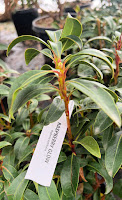
The best of the 4 places was Buck Jones. I found a good selection of native shrubs and trees. It is consistently one of the only places that I have found mountain laurel (Kalmia latifolia) in the spring, plus sweetshrub (Calycanthus floridus), Virginia sweetspire (Itea virginica), summersweet (Clethra alnifolia), oakleaf hydrangea (Hydrangea quercifolia), Florida hobblebush (Agarista populifolia), blueberry (Vaccinium), Rhododendron and native azaleas, and even buttonbush (Cephalanthus occidentalis).  They also have a small selection of perennials (lots of Phlox this time of year), but the native ferns selection is poor (one species only but none of the other places had even one). Many of these are cultivars associated with a dwarf form for smaller landscapes. The following photos are from Buck Jones.


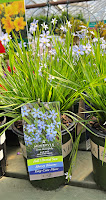
Pike Nursery has native plants to be found, like Buck Jones, tucked among the much bigger selection of non-native plants. They have a better selection of native perennials than Buck Jones (plus two native grasses and even one native annual, Salvia coccinea), but they are all cultivars and many are hybrids. I could not find native Juniper virginiana here (or anywhere), but they had weeping forms of white pine (Pinus strobus) and Eastern hemlock (Tsuga canadensis). A real surprise was finding something as unusual as Magnolia acuminata 'Yellow Bird' in bloom there.

I was disappointed that when I said I was looking for native plants, the Pike employee showed me a Vitex agnus-castus. I said that is not native, and he replied that “Plants that have been here a while are considered native.” I immediately replied that is absolutely not true! To his credit, he asked what is considered to be the proper definition of nativity after I said that. The following photos are from Pike.


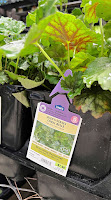
I was especially disappointed with Home Depot and Lowe’s. Their tree and shrub selection has almost exclusively gone to non-native selections, perhaps because they are buying from a list that features few natives. I feel like they have changed for the worse over the last 10 years. At both places, much of their inventory is the ‘Southern Living’ collection, an ill-named suite of plants that has nothing to do with Southern ecosystems. Where they once carried the evergreen Ilex vomitoria ‘Nana’ for foundation plantings, now Home Depot only has Japanese holly (Ilex crenata); Lowe’s did have a few Ilex vomitoria among the sea of I. crenata. The following photos are from Home Depot.


The following photos are from Lowes.


At best, these big box stores offer a seasonal selection of perennials that include a few native species: Phlox, black-eyed Susan (Rudbeckia), Coreopsis, as well as shrubs like blueberries (Vaccinium), and evergreen Rhododendron and  native trees like red maple (Acer rubrum), flowering dogwood (Benthamidia florida, formerly Cornus florida), and redbud (Cercis canadensis is the native redbud). Vines may include Carolina jessamine (Gelsemium sempervirens) and native wisteria (Wisteria frutescens ‘Amethyst Falls’). Many of their plants are cultivars or hybrids.  

A word about recognizing hybrids (examples below): If the name on the tag has an ‘x’ in the middle then it’s a hybrid (Rhododendron x aromi ‘Tipsey Tangerine’ – note it is wrong to call this a native azalea as its genes include more than just native ones). If the name on the tag lists only the genus name (Paparazzi Jagger Phlox), it is most likely a hybrid. If the name of the tag includes both genus and species (Cephalanthus occidentalis 'Bailoptics') then it is a selection of a species (in this case, for dwarf form).


The downsides of shopping in big box stores include: seasonal inventory (once spring stock is gone at Home Depot and Lowe’s, they move onto summer color); the potential that plants are raised with pesticides (Home Depot is good about labeling for that); poor signage (‘native’ is usually not indicated or the name provided may be insufficient to do research); and employees are there for stocking not plant knowledge.

Please know that I absolutely recommend that you first shop at dedicated native plant nurseries. They offer a reliable and dedicated selection of native plants year-round, many grown without pesticides, and are run by families who are dedicated to the cause of native ecosystems. 

If those nurseries are not available to you, these other stores may be your only option. I would encourage you to get to know the staff, ask them to order specific plants that you want, and get the selection improved by demand for more native choices. Education is key and some people just don’t know; tell them why having native plants in their selection matters. These places do stock invasive plants: English ivy, privet, nandina, mahonia, butterfly bush. Ask them to consider reducing their stock of known problem plants and adding native plants (and signage) instead. Change won’t happen without our input.