Sunday, March 25, 2012

Trilliums - a Georgia specialty

Georgia holds a special honor when it comes to trilliums: Georgia has more indigenous species than any other state – 22 species as of the last count with more being considered.  Trilliums are fairly uncommon plants in general and are much cherished by native plant lovers.   In undisturbed places there can be thousands of individual plants.  However, most of us have a chance to see only a few here and there.  I found 3 on our new property in 2003.  Over the last nine years, a few more have popped up, no doubt from seed sown long ago.  It takes at least 7 years for a seed to become a flowering plant.


Trillium catesbaei
Trilliums are so named because so many of the parts come in “threes”:  3 leaves, 3 sepals, and 3 petals are all visible to even the most novice of observers.    The plants grow from underground rhizomes that gradually increase in size each year.  Trilliums are “ephemeral” plants, usually fading in the hot weather and then remaining dormant until spring.  Seeds form in fruit structures called “berries”; each of the small brown seeds is attached to a creamed-colored eliasome which is attractive to ants.  Ants gather these seeds so that they can eat the nutritious eliasome, helping to disperse the seeds in the process.

One of the best experts on Georgia trilliums is Tom Patrick with GADNR (Georgia Department of Natural Resources).  He spoke to our native plant society in 2010 and provided a wonderful handout.  Most of this information is pulled from that resource.  

Tom divides the 22 species into two groups: the Wakerobins and the Toadshades.  These two groups are distinctly different in appearance so this separation makes sense.  He has further divisions within those two groups; if you want more information, please use the link above to read further as he deserves all the credit for that work. 

Wakerobin trilliums have uniformly green leaves with flowers on stalks that either hold the flower above the leaves or let it fall beneath the leaves.  Other sources note these as “pedicellate” trilliums, a reference to the stalk (pedicel) of the flower.  Some of these have white flowers that fade to pink. These are the twelve trilliums in this group:

Trillium catesbaei - Catesby's Trillium, Bashful Wakerobin, Rose Trillium.  
Trillium erectum - Red Trillium, Stinking Benjamin.
Trillium flexipes - White Trillium, Bentstalk Trillium.  
Trillium grandiflorum - Large-flowered Trillium, White Trillium.
Trillium persistens - Persistent Trillium.
Trillium pusillum - Dwarf Trillium.
Trillium rugelii - Southern Nodding Trillium.  
Trillium simile - Sweet White Trillium, Jeweled Trillium.  
Trillium sulcatum - Southern Red Trillium, Barksdale's Trillium, Rainbow Trillium. (This trillium was discovered and named by Tom Patrick!)
Trillium undulatum - Painted Trillium.  
Trillium vaseyi - Vasey's Trillium.  
Trillium sp. "Amicalola Trillium" – this is in the process of being named as a unique species.


Trillium flexipes
Trillium grandiflorum


Trillium pusillum

Trillium rugelii


Trillium erectum
Trillium undulatum


Toadshade trilliums have mottled leaves with sessile flowers; sessile flowers have no stalks, they sit directly on top of the leaves. Other sources simply refer to these as “sessile” trilliums. These are the 10 trilliums in this group:

Trillium cuneatum - Sweet Betsy,  Purple Toadshade.  
Trillium decipiens - Chattahoochee Trillium, Deceptive Trillium.  
Trillium decumbens - Trailing Trillium, Decumbent Trillium.  
Trillium discolor - Pale Yellow Trillium. 
Trillium lancifolium - Lanceleaf Trillium. 
Trillium luteum - Yellow Trillium.  
Trillium maculatum - Spotted Trillium.  
Trillium reliquum - Relict Trillium.
Trillium  stamineum - Twisted Trillium.
Trillium underwoodii - Underwood's Trillium.

Trillium cuneatum is by far the most common and widespread of the toadshade trilliums - even more so than indicated by the USDA map as my county's populations are not represented.  There is quite a bit of variance in color forms in the species - most petals are deep burgundy but some can be almost green.  Even the sepals can vary from green to burgundy.  Occasionally, individuals with multiple leaves have been found - I've seen as many as 12 leaves on a single plant.  The degree of mottling is also variable; I have seen leaves that are almost entirely silver, with very few spots.


Non-standard color, Trillium cuneatum
Standard color, Trillium cuneatum


Trillium discolor and Trillium luteum may both seem to resemble green forms of T. cuneatum, but they have distinct features that separate them.  I love the unique lemon-y fragrance of T. luteum.

Multi-leaves, Trillium cuneatum
Trillium luteum


Trillium decumbens
Trillium lancifolium


References:


Pictorial: Mount Cuba Center of Delaware has a beautiful publication with pictures and descriptions of about 30 species found in the southeastern and northeastern United States.  

Book: Frederick and Roberta Case’s Trilliums, published in 1997, is considered one of the best.

I hope that you have the opportunity to see and enjoy some of these special Georgia wildflowers this spring.  

Sunday, March 18, 2012

Finding native plants that are appropriate

“Right plant, right place” is a well-worn phrase that is as true today as it was the first time it was spoken.  It’s also every bit as true when selecting native plants for your garden or a restoration area.  After all, you want your plants to thrive, your investment to be worthwhile, and your labor in planting them to have been useful!

A thriving clump of Coreopsis auriculata


The goal then is to research choices so that you choose a plant that will get the right amount of light, the right amount of moisture, and is situated in a soil (alkaline/acidic, well-draining/clay, etc.) that is appropriate for it.  Oh, and it’s native.  Wait – native to where?  You see, that makes some difference.  Consider 3 situations:

-         Plants native to the western United States aren’t always going to do well in the eastern United States and the insects and animals that benefit from it certainly aren’t in the area.  I have an Arizona cypress (Cupressus arizonica) in my yard but I consider it just another ornamental, not a “native”.
-         Yet, plants native to the eastern United States are not necessarily native to Georgia.  Balsam fir (Abies balsamea) is not naturally found (that is, it is not indigenous) to south of Virginia.
-          Plants native to one area of Georgia are not necessarily native to the area in which you live.  Southern magnolia (Magnolia grandiflora) is indigenous to the Coastal Plain of Georgia.  When relocated to the Piedmont (the area in which Atlanta resides), it can actually thrive too well and become an aggressive pest in natural areas.


Native range in Georgia of Magnolia grandiflora

Now, I’ll leave it up to you to decide how regionally native you want your plants to be, but you should give it some consideration.  Researching your choices is the best thing you can do – for both of you!  That still leaves you the question of determining what native plants are indigenous to your area of the country, your state and even your county.  For the sake of brevity (and the very name of this blog!), I’ll just consider how to determine when plants are native to Georgia.

First consider the physiographic regions of Georgia: the Coastal Plain, the Piedmont, the Blue Ridge, and the Valley and Ridge (note: the area shown as Valley and Ridge includes a small portion of another region called the Appalachian Plateau in Dade county).  Each region has a variety of plants, many of which do overlap between regions, as well as differences in soil type, elevation, moisture and land forms.


Once you understand what region in which you reside, your search can begin. Your native plant society can be an excellent source of information.  The Georgia Native Plant Society has partial plant lists for the Piedmont and the maritime section of the Coastal Plain.These lists provide just a portion of the plants naturally found in these areas, but in general they are the most common or available plants in the landscape trade.  Another source of information is the USDA PLANTS database found on the web.

The USDA database has been populated based on information reported and entered on a county by county basis by knowledgeable people.  While it is not 100% accurate (and some counties have downright skimpy information!), it is a good place to start.  When searching the county records, you might also consider looking at the information for counties adjacent to yours.


Here is how you find county level plant details in the USDA PLANTS database:

-          Select the “Advanced Search” selection on the left hand side under the general search box.  This will bring you to a page of options.
-          Only select the boxes that matter.  In the third box under Distribution, scroll down to the Georgia section and select your county.  You can only pick one at a time.  You can click “display” if you want the output to display the county name.
-          From here, make selections that are meaningful to you – I like to select the following in the Taxonomy section: under Scientific name, choose “Accepted names only”; for the box “rank”, choose “Only species epithet” and unclick all display boxes except genus and species; then also check display for “national common name”
-          If you only want to see native plants, in the Ecology section, choose “L48 Native” under “native status”.  If you want a particular type of plant (like “shrub”), make a choice in “growth habit” in the same section.
-          Scroll all the way to the bottom of the page and click the button “Display results”

Here is an example showing the output from choosing all native tree plants in Fulton County, Georgia and choosing to display the common name.  This would give you a good idea of what trees naturally occur in your area. Copy and paste your list into a document to save.  Again, you may also want to search counties around you.  Use your back button to go back and modify your search and then run it again.  Play around with it until you get the output that works for you.


I hope this helps you figure out what native plants are candidates for your area. Once you have some lists of plants, either from the above search or from plant lists already put together, you can research the sun/shade, moisture, and size conditions for where you want to plant.  However you get there will help you find the right plants for the right place so that everyone is as happy as this clump of trillium that the deer have not yet found in my yard:

Trillium cuneatum with Pieris phillyreifolia
 

Sunday, March 11, 2012

White Blooming Roadside Trees

This is the time of year that drives native plant folks crazy.  Roadsides and vacant spaces throughout Georgia are displaying upright trees with puffy white blooms.  People sigh and say "Oh, those trees are so pretty."  Before the top of my head explodes, I am compelled to burst out "Those are not native, and they shouldn't be there!"


Pyrus calleryana
James H. Miller, USDA Forest Service
Bugwood.org


People are actually not surprised to find out that those trees are ornamental pears: Pyrus calleryana.  They look just like the ones sold in the store.  But people are surprised to find out how they got there.  The answer is cross-pollination.

Ornamental pears like 'Bradford' are sterile because they are self-incompatible.  This cultivar will not produce fruit by itself.  For many years, people planted 'Bradford' pears and none of them had fruit.  Then the trees began to split and break.  Nurserymen decided to find another tree with a better growth habit.  New cultivars began to appear in the stores: 'Aristocrat' and 'Cleveland Select' (also known as 'Chanticleer') were two of the early ones. When these new cultivars were planted near the old  'Bradford' trees, cross-pollination began to occur.  All the trees which were sterile with their OWN pollen now had a source of compatible pollen and began to produce fruits.


Chuck Bargeron, University of Georgia, Bugwood.org


Birds, especially European starlings, ate some of the fruit and spread it to new areas.  The seeds sprouted and grew.  While the upright form of the parent was passed along to the seedlings, so was another trait that the carefully bred parent didn't have: thorns.  Roadsides and vacant lots became the new home of these thorny invaders, their rapid growth and dense canopy shading out other plants, especially in the southeastern U.S. which shares the same climate as their  native range.


There are many scientific reasons while this plant has become a successful invader - for more in depth details, read the third reference listed below (Culley and Hardiman).  This plant is one of the most noticeable invaders of this decade - an infestation unfolding right in front of us.

Good references for this cross-pollination story include the following:

'Bradford Callery Pear (and other cultivars) Pyrus calleryana ‘Bradford’ ' by Alex Niemiera
'The beginning of a new invasive plant: A history of the ornamental callery pear in the United States' by Theresa Culley and Nicole Hardiman

So if you are thinking about planting this tree, please don't. Research other trees, preferably native, for your area.  And if you have this tree, please consider removing it.  Especially if you notice it setting fruits.

David J. Moorhead, University of Georgia, Bugwood.org

On a positive note, native redbuds (Cercis canadensis) are blooming now.  Their slender branches with tiny purple flowers are peeking out on sunny roadsides, usually from behind something else.  In full sun, they have a more spreading shape.  Their heart-shaped leaves are easily recognized.


P. S. That is not to say that native white trees won't be blooming soon - they will!  I look forward to seeing the blooms of serviceberry (Amelanchier spp.) very soon as well as black cherry (Prunus serotina) and the native plums (also Prunus). But none of those will have the stick-straight silhouette of the ornamental pear volunteers.

Redbud, Cercis canadensis, on the side of the road

Sunday, March 4, 2012

Bluets, Beauties and Bloodroot – oh my!

As someone that lives in a semi-rural area, I delight in finding native plants popping up in defiance of attempts by humans to landscape over them.  I have heard stories of trilliums popping up in lawns (and people asking how to get rid of them!) and seen many a tree sprout in an ill-chosen location.  This week I came upon a couple of my favorites – bluets (Houstonia caerulea) and springbeauties (Claytonia virginica) growing in suburban lawns.

Claytonia virginica
Houstonia caerulea


I would not say that the owners of these lawns considered these plants “weeds” but I guarantee you that they certainly don’t realize they are native spring wildflowers for which some people pay good money!  The bluets are tiny blue flowers with even tinier leaves.  They are growing in the outer edge of a lawn in my neighborhood that uses no chemicals (yay!).  

The springbeauties are in the lawn of the local library; they have created an amazing colony on one side of the building.  I’m sure the slender foliage of this plant is easily overlooked in a lawn.  Both wildflowers live for only a few months in the spring before going dormant.


Carpet of springbeauties at the library

It makes me smile to find these charming natives in such unexpected places in my everyday life.


Bloodroot (Sanguinaria canadensis)  is also blooming this week, and I have a chance to see a whole bunch of it. I am babysitting several hundred pots of it for the Georgia Native Plant Society. It was rescued from a suburban backyard that was undergoing a renovation – the homeowners didn’t even realize what they had: the largest, thickest mass of bloodroot that any of us had ever seen in one place.  But they graciously allowed us to rescue the part in the path of the renovation so that we can sell it in our spring plant sale.  We also helped them dig up and save a bunch of it for themselves so it can be replanted after construction.

Bloodroot (Sanguinaria canadensis)
With spring approaching quickly, I hope that you are finding some of our special Georgia wildflowers in your area.  Where you find them just might surprise you.

Sunday, February 26, 2012

Native Gingers – a deceptive common name

Common names can be tricky and our native “ginger” is no exception.  These plants are in the genus Hexastylis if they are evergreen and Asarum if they are deciduous.  Neither genus is related to the non-native edible "ginger" plant which is Zingiber officinale.  Other common names for our native gingers include heartleaf and little brown jug, references to the shape of the leaves and to the shape of the flowers, respectively.


Hexastylis shuttleworthii

While four species of Hexastylis are found in the state of Georgia, the species Hexastylis arifolia has the most widespread distribution - it can be found in the mountain regions, the Piedmont area and even in the Coastal Plain.  Even when people don’t know the name of it, many recognize it upon sight as a familiar woodland plant.  The size, shape and pattern of the leaf can be quite variable depending on local conditions.  The fleshy white roots support a small crown from which new leaves emerge each spring.  The old leaves wither and fade away as the new ones unfurl.  Small urn-shaped brown flowers are borne under the cover of fallen leaves, barely opening enough for the pollinators to crawl inside.  It is one of my favorite spring time activities to show these unique flowers to kids and tell them that they are helped in their life cycle by ants.  The seeds are encased in a fleshy coating known as eliasome.  The ants take the seeds back to their nest so that they can eat the nutritious coating, thus dispersing the seeds into different areas.

A very robust clump of Hexastylis arifolia

I have found Hexastylis arifolia to be a very adaptable plant in the garden.  When given adequate morning sun, a single plant can grow into a handsome clump and can serve as a ground cover in sufficient quantities.  Dry conditions may cause it to wilt, but it rebounds nicely when watered.

A more petite member of the family is Shuttleworth ginger, Hexastylis shuttleworthii.  Naturally found along moist areas like streamsides, this species is also very happy in the garden and spreads even more readily in ideal conditions.  The small leaves are usually textured and mottled in rich patterns. Despite the small size of the leaves, the flowers are larger and more showy than others.  Another common name for this species is large-flowered ginger.  The cultivar ‘Callaway’ is considered to be from the variety Hexastylis shuttleworthii var. harperii.


Flowers, H. arifolia
Flower, H. shuttleworthii


Asarum canadense is the only deciduous ginger found in the southeastern U.S. It’s range extends upwards from Georgia, where it is found in just a few counties, all the way north into Canada. Not as well known to Georgia gardeners, this plant is “ginger” to most of the people outside the southeast.  It is a hardy and useful summer groundcover for many northern gardeners.  It differs from members of the Hexastylis genus in several ways – from the thin, deciduous leaves, to the dense hairs on the plant parts,  to the showy red flowers.  A friend shared a start of it with me over 10 years ago and it has grown well in my yard.

Asarum canadense
Flower, Asarum canadense


Now is your chance to spot some evergreen ginger in the woodlands around you. Take note and plan to visit them again as the new leaves expand above and the flowers bloom below.

Sunday, February 19, 2012

Taking Stock of the Flock

I garden for wildlife.  I enjoy blooms and attractive foliage as much as anyone, but my plants do double duty.  My plants support wildlife: birds, bugs, beetles and many others.  So when I spot a native bee head first in a flower or bird winging it’s way through the yard – I feel like I’ve accomplished something.  During the last few weeks of winter, before buds open and I get distracted by spring, I took some time this week to record what birds are hanging around the place.

Turkey
We have been thrilled lately to have a flock of about 20 turkeys wandering through the neighborhood.  They show up in our yard around 8 am, searching the leaf litter for leftover acorns from the tall southern red oaks (Quercus falcata) in the yard.  This week several of the males were fanning out their tail feathers and puffing up their feathers.


This is an appropriate week to take stock of what birds visit my yard because Feb 17-20 is the Great Backyard Bird Count. On that site they have a printable checklist that you retrieve by entering your zip code to get a list of birds that you are likely to see in your area in February.

Hermit thrush


Of course this time of year I will only see the year-round birds and winter residents.  This year I was thrilled to identify (with help!) two new birds for me - a hermit thrush and a yellow-rumped warbler.  Both are only winter residents in Georgia.


Hermit thrushes only eat insects, but this one stopped by the deck to see what all the fuss was about at the bird feeder.  I have since seen him (or her) around the yard on the ground.


Yellow-rumped warbler


The warbler, even though it has similar coloring to the goldfinch, has a differently shaped bill.


The birds that I see are found in predictable places. There are the birds that visit bird feeders (which by the way are a small portion of all the birds): 

Tufted titmouse, Carolina chickadee, and goldfinch.  If you put up a seed feeder, you will see these birds, they visit in droves!


Goldfinch and tufted titmouse


There are the birds that occasionally visit the bird feeder: 


Cardinal, bluejay, red-bellied woodpecker, white-breasted nuthatch, dark-eyed junco, and Carolina wren.

Bluejay

White-breasted nuthatch


Then there are the birds that visit the birdbath but not the feeder because they feed only on  insects: 


Brown thrasher and white-throated sparrow were the two noted this year.  Of course other birds come to the birdbath for a drink or a bath.


Red-bellied woodpecker


Elsewhere in the yard, especially on trees: 


Yellow-bellied sapsucker, downy woodpecker, red-headed woodpecker and even pileated woodpeckers and occasionally an eastern phoebe.


Bluebird


Birds found in open areas: 


American robin, mockingbird, bluebird.  I was thrilled to finally capture this picture of a bluebird this week.


Red-shouldered hawk


Finally, birds seen at a distance or heard: 


American crow, cedar waxwing, black vulture, red-shouldered hawk, barred owl.


I feel lucky to have so much wildlife (in addition to the deer, squirrels and chipmunks!) around my yard and neighborhood.  I know that wooded areas help support them.  I feel sure that having a lot of native plants and not using a lot of chemicals helps as well.  If you'd like to have more birds in your yard, research how you might support them beyond putting out feeders.  You might find some tips in a previous blog that I wrote: Natural Bird Food.

I happened to be at Amicalola Falls State Park yesterday while the volunteers were birds of prey that cannot be released back into the wild.  Two of the birds were ones that hang around my area so I am including pictures that I took of them there.

Barred owl

Black vulture


Sunday, February 12, 2012

Arbor Day in Georgia

Arbor Day is celebrated on different dates throughout the U.S. due to climate differences. For Georgia it is the third Friday in February – this will be February 17th in 2012.  National Arbor Day gets a lot of attention in late April, but in Georgia it is better to plant trees much earlier when trees are dormant, temperatures are cool, and winter rains are possible.


With Arbor Day coming up this week, I’d like to talk about the following three points:

  • Why it’s important to plant trees
  • Why it’s important to plant native trees
  • Why some native trees might be a better choice than others


Importance of planting trees

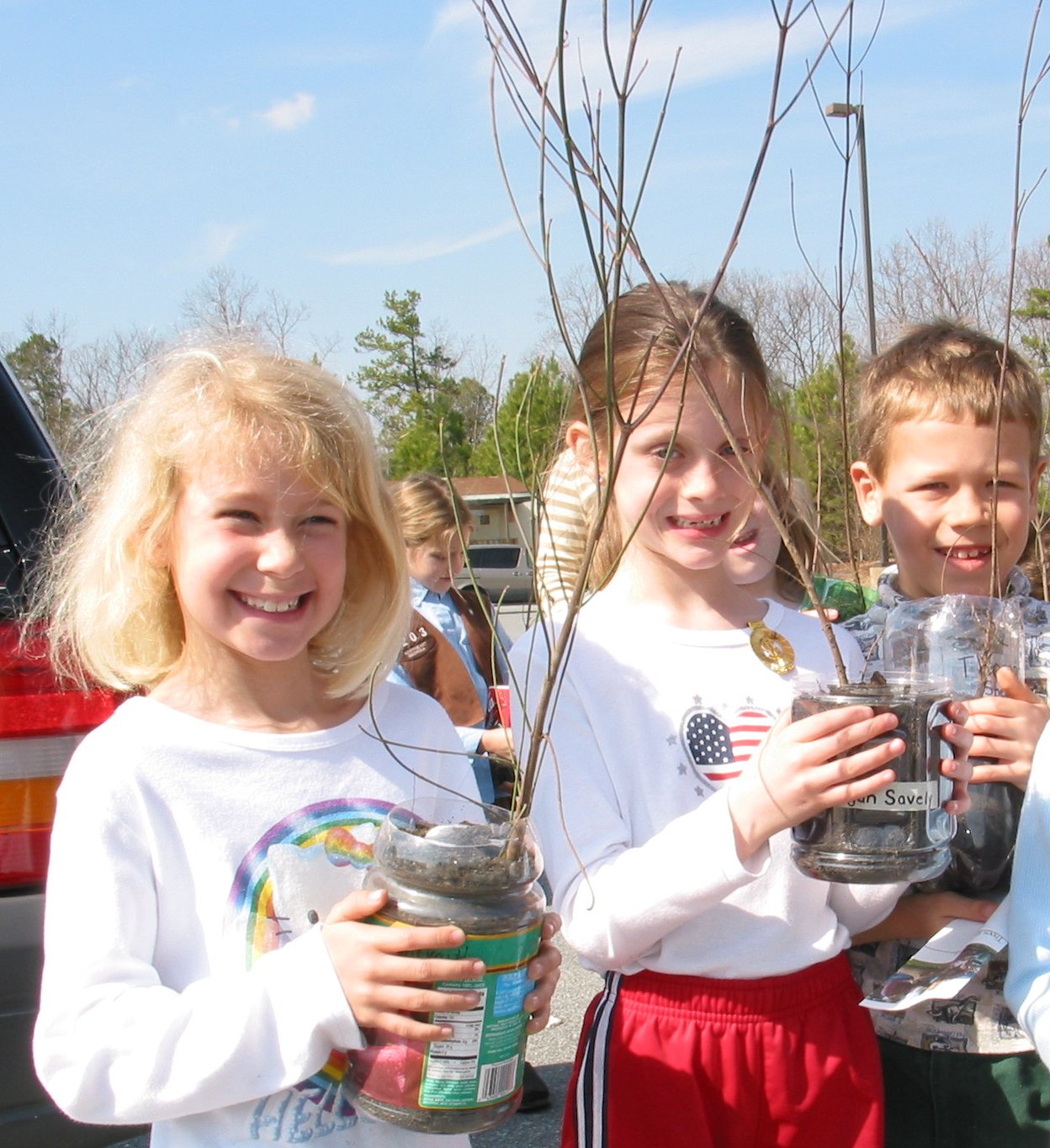
When my kids were in elementary school I would organize an Arbor Day event on behalf of the PTA.  Most years we gave out seedlings that we purchased from the Georgia Forestry Commission.  The kids loved the event, and the older ones could easily answer the question about what benefits do trees provide: Oxygen, shade, food for us and wildlife, shelter for wildlife, beauty, and protection against soil erosion.  They also provide wind breaks, and they can provide privacy.


Why native trees

So you might think that it doesn’t matter what kind of tree you plant, but it does matter.  Native trees support native insects and so they also support the creatures that rely on those insects – the whole local ecosystem has grown up around native trees and it depends on them.  There are insects whose larval form feed exclusively on a plant or group of plants – insects such as the eastern tiger swallowtail butterfly (Papilio glaucus).  Eggs are laid on the leaves of wild black cherry (Prunus serotina) and tuliptree (Liriodendron tulipifera); the caterpillars that hatch will consume a small amount of the overall foliage.  Choosing to plant a non-native tree instead reduces the biomass available for specialized insects, resulting in fewer insects overall.  There are studies that show that specialized native insects (most of what we have) cannot adapt to eat non-native plants. Fewer insects equals less food available for the birds that feed these caterpillars to their chicks.  


Why some native trees are better choices

In the paragraph above I talked about why choose a native tree over a non-native one.  Now I'll like to talk about why choose particular native trees rather than just "any" native tree. Think "native" on a smaller scale - the environments in which you live need the indigenous plants that support them.  For example, growing blue spruce (Picea pungens) in north Georgia adds nothing to the local environment - it is as alien to the insects that live here as a plant from Europe because it is native to the western United States.


Consider also diversity when choosing a tree.  If your area is full of oak trees, consider planting something else instead of another oak.  Doug Tallamy, entomologist and author of Bringing Nature Home, has created a top twenty list of woody plants (and perennials) for the mid-Atlantic region.  This list is based on the number of different species of Lepidoptera they support - those caterpillars that the birds love to eat!  While oaks are first on the list, adding a hickory (Carya sp.) or birch (Betula sp.) to your yard would allow you to support much more biodiversity.  

Take a survey of not only your yard but the areas around you to see what native trees are already there.  But don't that list stop you from indulging in something you love like the iconic flowering dogwood (Cornus florida) or the early flowering redbud (Cercis canadensis).  If you want to attract more birds to your yard with fruiting trees then consider serviceberry (Amelanchier sp.) and hawthorn (Crataegus sp.).

So when Arbor Day comes this Friday, consider planting a tree for all the right reasons.  And if you have kids or grandkids, be sure to involve them and talk about the reasons that we plant trees and conserve them.

Eastern tiger swallowtail butterfly (Papilio glaucus)